Musings of an Old Chemist

A Chemist's Perspective on the Habits and Skills STEM Students Need For Success

Tag: awe and wonder

  • Weekly Quotation: October 30, 2025: The Joy of Discovery: Inspiring Young Minds Through Science

    Weekly Quotation: October 30, 2025: The Joy of Discovery: Inspiring Young Minds Through Science

    For your consideration:

    I am often amazed at how much more capability and enthusiasm for science there is among elementary school youngsters than among college students.

    – Carl Sagan


    I, along with a group of my high school math and science program students, conducted the following demonstration for a group of elementary school students, mostly fourth and fifth graders:

    To begin, we discussed how the air we breathe is a mixture of several different gases. And how every gas, whether it is an element (such as nitrogen or oxygen), or a compound (a combination of elements in a specific ratio, such as carbon dioxide), has a unique fingerprint, consisting of a set of colored lines, called its spectrum.

    After dividing the class into groups of three students each, we handed out paper glasses with diffraction grating lenses, crayons, a ruler, and large pieces of drawing paper. We asked them to draw seven six-inch lines on their paper, making sure there was plenty of space between each. They were to label these lines in order: hydrogen, hydrogen, nitrogen, oxygen, neon, carbon dioxide, and air.

    Then, using a spectrum tube high-voltage power supply and the spectrum tubes for air, carbon dioxide, helium, hydrogen, neon, nitrogen, and oxygen, we began the demonstration.

    In a darkened room, I instructed the students to put on their diffraction grating lenses. I then proceeded to insert the spectrum tubes of the following gases in order: hydrogen, helium, nitrogen, oxygen, neon, and carbon dioxide into the spectrum tube high voltage supply generating the spectral lines of each. I chose these gases and the order they were placed into the voltage supply because starting with the spectrum of hydrogen, the spectrum build in complexity from left to right. As each gas’s spectrum was displayed, we asked the students to use their crayons and drawing paper to color the spectral lines they observed. We were not concerned with the wavelength of the lines, only the color pattern from left to right.

    After turning up the lights, I posed the following question to the students: “Which of these gases do you think are in the mixture that makes up the air we breathe?” While most students, ranging from elementary to high school, and even some college students and adults, can identify some of the gases present, very seldom does anyone know them all. As each group made their guess, we wrote their answers on the board for everyone to see, without any judgment as to whether the answers were right or wrong.

    At the end of this part of our discussion, we darkened the room again. This time, I inserted the spectrum tube for air, asking the students again to color the spectral lines they observed. 

    To finish our demonstration, we asked each student group to compare the lines they colored for air with their spectral lines for the other gases. And to circle which gas’s spectral line pattern matched up with the lines they saw in the spectrum for air. Quickly they began to see that there were several combinations of individual gas’s spectral lines present in the air’s spectrum. We collected each group’s drawings and discussed their results.

    Finally we posed the following questions: “What did they learn today?”, “Can you now tell us which gases you believe are present in the air we breathe? And, more importantly, “Did you have fun?”


    Commentary

    The students’ initial reaction to observing spectral lines through diffraction grating glasses was truly captivating. It felt as though we had opened up an entirely new world for them. There was no immediate need to delve into the scientific explanation behind the spectra’s generation; the demonstration’s primary goal was to cultivate the joy, awe, and wonder inherent in scientific discovery. My experience in the classroom and my years of tutoring often revealed that many high school and college students prioritize grades over a sense of wonder, potentially finding this demonstration “lame” or even boring, a waste of their time. However, sometimes the simplest method for explaining complex phenomena is by nurturing the innate sense of awe and wonder within us all.
  • Weekly Quotation: October 1, 2025: Chemistry: My Journey From Struggle to Passion

    Weekly Quotation: October 1, 2025: Chemistry: My Journey From Struggle to Passion

    For your consideration:

    Chemistry is not torture but instead the amazing and beautiful science of stuff, and if you give it a chance, it will not only blow your mind but also give you a deeper understanding of your world.

    Hank Green

    My initial perception of chemistry differed significantly from Hank Green’s. My unfortunate experience with Dr. Bill Sagar’s Organic I course and his synthesis lab at Centre College in the late 1970s was responsible for this perspective. I would have preferred a novocaine-free wisdom tooth extraction to repeating that freshman year course. The sheer volume of material on his exams, coupled with my inability to memorize and regurgitate facts, proved overwhelming. Furthermore, I found the compound syntheses in the lab impossible. While I excel at instrumental lab activities and compound extractions, Dr. Sagar’s lab experience was so disheartening that it nearly destroyed my desire for any further lab courses at Centre. Ultimately, that single course, in which I received a “D,” sealed my fate as a pre-med major.

    A year later, Dr. John Walkup, who was the Chair of the Chemistry Division, and would become my mentor, presented a holistic view of chemistry in his courses. He emphasized the habits, traits, and skills crucial to be successful as a chemist. His approach inspired in me an appreciation and passion for chemistry in all areas, from Organic II (yes, I enrolled in and survived a second year of Organic, this time I got a “B”) to Physical Chemistry (a stunning blend of math and chemistry) and Instrumental Chemistry (which became my true love). We explored  not just the how but also why reactions occurred, but also their application, their importance in different field of chemistry. We were taught to “think’ like a chemist, the importance of observation – recognizing strengths and weaknesses of a chemical process, then identifying the possible sources of error in our analyses.

    After 35-plus years in various fields of chemistry, I strongly recommend to student pursuing a chemistry major or a broader STEM career that I tutor, to maintain an open mind throughout their science coursework. It will not always be an easy path to follow. You will encounter challenges, and there will be days when switching to business management or accounting might seem appealing. However, persevere. Have faith in yourself. Seek out mentors, engage with your professors, learn their office hours, and visit frequently. While it may now always seem like it, I can assure you that chemistry is a beautiful field of study. It is both an art and a science, inviting you to experience the wonder and awe of the world around you.

  • Weekly Quotation: August 20, 2025: Awe And Wonder

    Weekly Quotation: August 20, 2025: Awe And Wonder

    He who can no longer pause to wonder and stand rapt in awe, is as good as dead; his eyes are closed.
    – Albert Einstein

    Awe is a powerful emotion defined as a feeling that what we are witnessing is beyond our current understanding. But our perception of awe and wonder evolves throughout our lifetimes. For example:

    As children, our curiosity and wonder are fueled by the pure joy of discovery. A messy papier-mache volcano built on the kitchen table, or a curious question about the stars, is enough to stimulate our search for answers.

    As we get older, our perspective shifts. The world begins to measure us, and we, in turn, begin to measure ourselves. Our sense of worth becomes tied to external rewards—such as grades, test scores, titles, and salaries. The process of learning and discovery becomes a means to an end, rather than a joy in itself.

    We get so engrossed in our daily routine—rushing to appointments, ticking off to-do lists, and worrying over expectations—that we overlook the wonder in the world around us. Consider how often you’re in such a hurry while driving that you fail to notice your surroundings. Do you recall the turns you made, the roads you took, or anything that happened during your commute? 

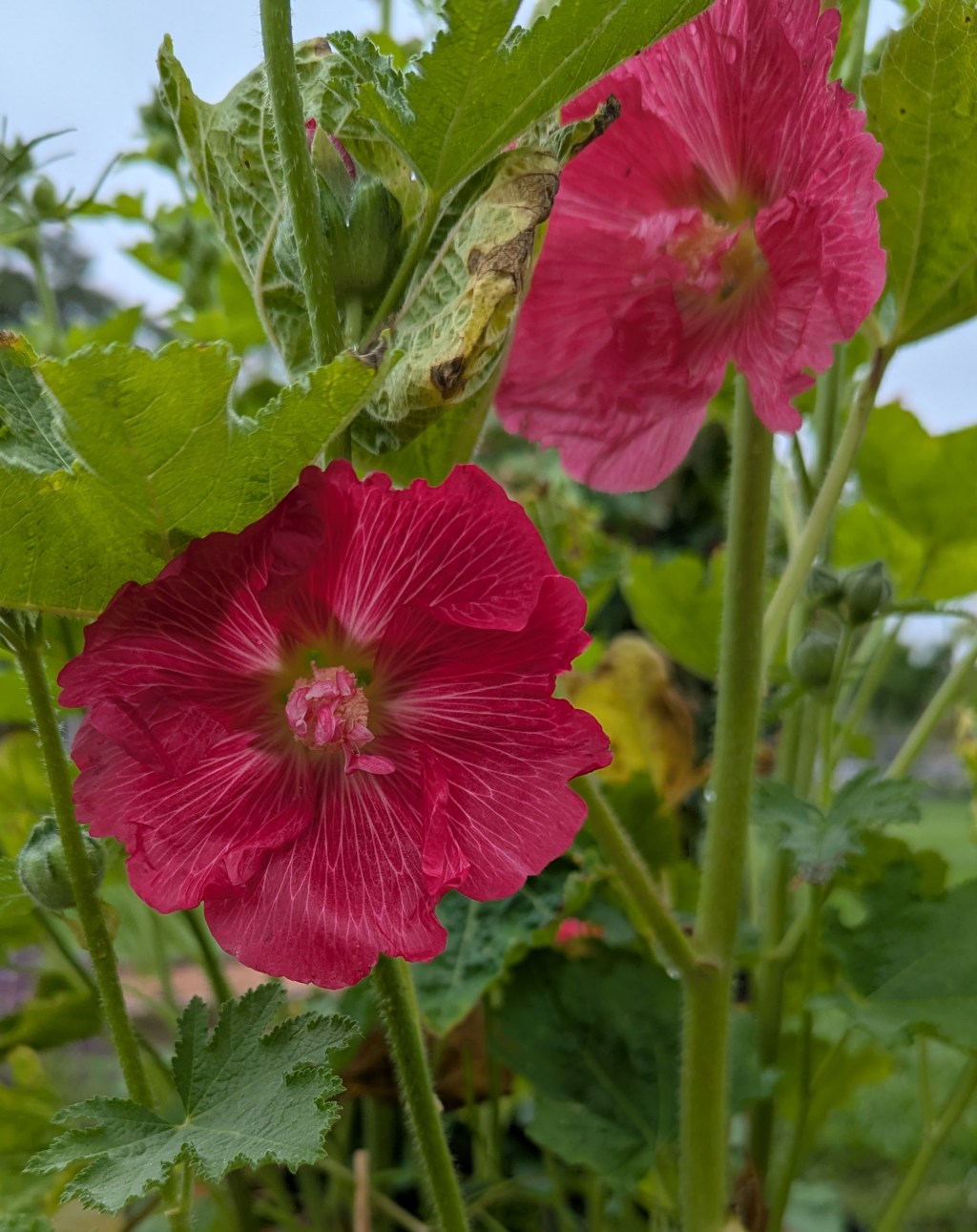
    Now in my sixties, I consciously strive to appreciate life’s beauty and complexity, taking the time to marvel at nature. This includes the intricate details of plants and flowers in my garden, as well as observing Jupiter’s inner moons or the Pleiades constellation through my telescope on a clear night. This past Friday, at 5 a.m., while walking our dog, I noticed the stunning alignment of Venus and Jupiter on the eastern horizon. This sight filled me with such awe and reminded me of the insignificance of my daily concerns—what I needed to do that morning or what I hadn’t accomplished the day before. It reaffirmed my faith in God and highlighted my small place within these mysteries.