Musings of an Old Chemist

A Student’s Guide to Navigating Life, Career, and the Unknown

Month: August 2026

  • Personal Growth: The Campfire Analogy Explained

    Personal Growth: The Campfire Analogy Explained

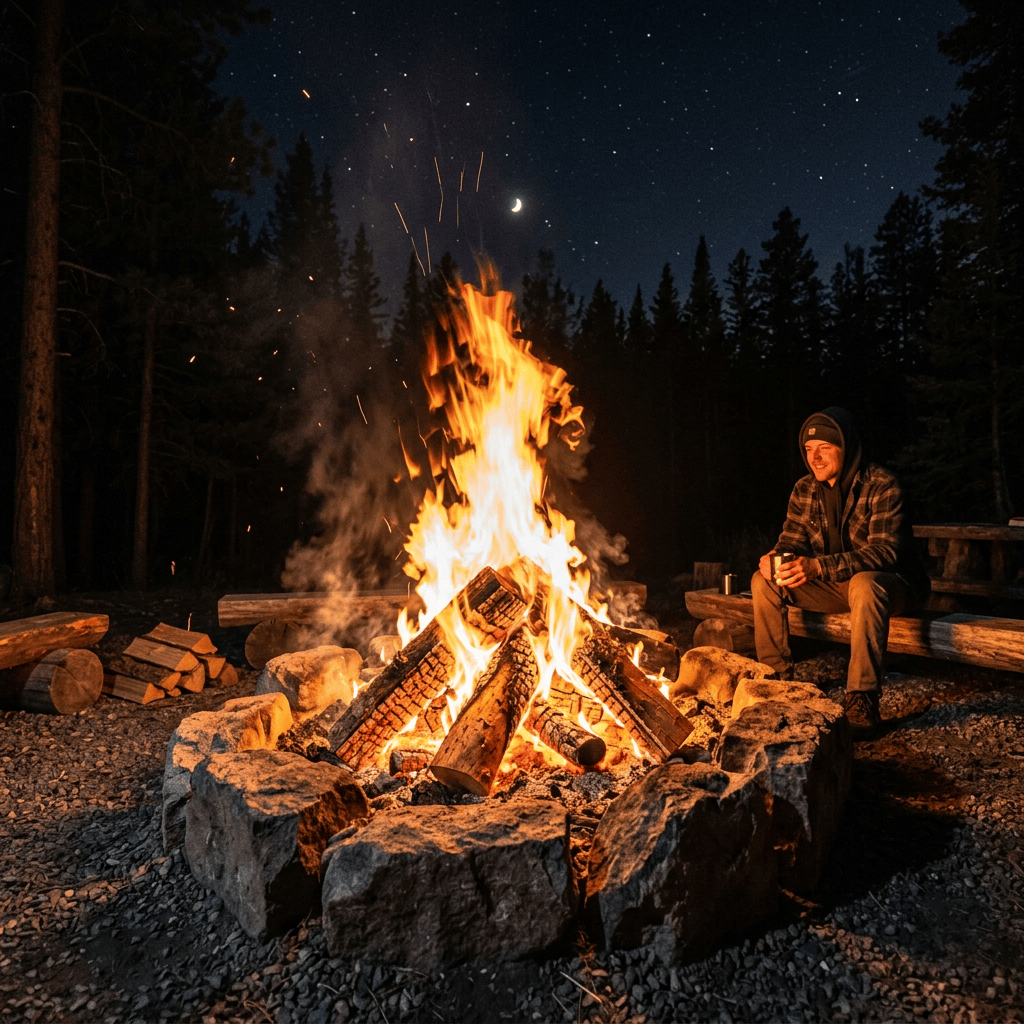
    I associate the process of personal growth with building a campfire when I go camping. To begin to understand this personal growth/campfire analogy, it’s helpful to examine the basic steps and components of a campfire, which, by definition, is a combustion reaction. 

    The general formula for the combustion reaction process is:

    Reactants + Catalyst + Activation Energy ⇒ ReactionMechanism ⇒ Products + Byproducts

    Whether it is in a fireplace, a backyard fire pit, or a campfire, the combustion process is in its simplest form:

    Fuel + Heat (Spark) + Oxygen ⇒ (Reaction mechanism or process) ⇒ Light + Heat + CO2 

    Why Use a Campfire as an Analogy For Personal Growth?

    Here are five reasons why a campfire is such a powerful analogy for personal growth:

    1. Building a Campfire Requires Effort on Our Part 

    A campfire doesn’t happen by accident, and neither does personal growth. You can’t just throw a match at a pile of logs and expect it to burn. You have to collect the right materials and stack them together in the right order: tinder (paper, dry grass, and pine needles) to catch the spark, kindling (small twigs and branches) to build the heat, and larger logs to sustain it. Likewise, we can’t tackle the most complex challenges in our lives, whether it’s in the classroom, workplace, or at home, without first identifying and mastering the small, fundamental skills and gradually building on them.

    2. The Essential  “Spark”

    Even if you’ve built the perfect campfire, nothing happens without a spark or flame to ignite the fire. In personal growth, that spark is initiative, which ends with you taking action. It might come from within, something that piques your curiosity or a sudden desire to improve. Or, it may come from outside, such as encouragement from a teacher, parent, or mentor. Regardless of the source of the “spark”, your effort and energy must be applied to ignite the personal growth process.

    3. Room to Breathe

    Early on, one of the most common mistakes I made when building a campfire was rushing the process,  packing the firewood too tightly, too close together. If the fire doesn’t have enough space for airflow (oxygen) it needs, it gets smothered and dies. The same is true for learning and our development. If we feel overwhelmed, feel too much pressure to perform and meet high expectations, and are not given the “space” to make mistakes and process new information, we may lose our motivation to try. Personal growth requires breathing room.

    4. It’s a Transformation Process

    A campfire is a series of energy transformations. It takes raw materials (tinder, kindling, and logs) and turns them into heat and light that can warm a campsite and brighten the dark. Personal growth does the same thing. It takes our energy and efforts, our life’s lessons (both good and bad), time and experience, transforming them into new abilities, wisdom, and character traits that ultimately benefit us and the people around us.

    5. Campfires Demand Constant Attention

    A fire is never “finished” until it’s out. If you walk away from it, it will eventually burn through its fuel and fade into ashes. It requires someone to keep an eye on it, adding tinder, kindling, and logs whenever needed. Likewise, personal growth is a lifelong process; there is no point at which you can simply choose to stop learning and expect to remain as “sharp” mentally and emotionally.

    The Significance of Heat and Light

    Light: Clarity, Understanding, and Guidance

    Where the light of the campfire helps penetrate the darkness, light in our personal growth analogy represents our mental and emotional clarity and our understanding of who we are as a person. Clarity and understanding come in two forms: internal and external.

    • Internal: It is that “lightbulb” moment when a confusing problem, work assignment, or situation suddenly makes sense. When we struggle, regardless of the situation,  we are figuratively in the dark. As we grow, practice, and learn, we generate our own “light”—the ability to see solutions to our problems, and we begin to understand the world around us more clearly.
    • External: Our metaphorical light is visible to others from a distance. As we grow in character and knowledge, our “light” serves as an example for others. We become a leader, a teacher, a guide for our friends, coworkers, and family members, showing what is possible through hard work and dedication.

    Heat: Passion, Action, and Empathy

    Heat is energy you can feel. It provides warmth against the cold and the energy needed to do work. In personal growth, heat represents our passion, actions, and the impact we have on others. Like light, heat exists in two forms: internal and external.

    • Internal: Heat is the internal drive and passion that keeps us moving forward. It’s the energy and motivation to tackle the next challenge, study for the next test, complete the next project, or try again after failing. It is the active desire to improve.
    • External: Heat from a campfire radiates outward, warming the area. A well-tended fire warms everyone gathered around the campsite. Similarly, as we grow in character and wisdom, we radiate a “warmth” that impacts our community. This looks like empathy, kindness, and the willingness to help someone who is struggling.

    Final Thoughts: The Perfect Balance

    A fire that produces only light without heat is like a lightbulb; you can see the area around it, but it won’t keep you warm in the cold or roast your marshmallow for s’mores. A fire that produces heat but no light is hidden from sight; it emits heat energy, but you still can’t see where you are going.

    True personal growth yields both. We don’t just gain the “light” from our knowledge and experience; we also develop the “heat” of good character traits (compassion, empathy, humility, perseverance, and resilience), passion, and a desire to be a positive influence on everyone around us.

  • The Danger of Believing Your Own “Press”

    The Danger of Believing Your Own “Press”

    Long before I had fancy titles or stood in front of rooms as the resident “expert,” I was just an instrumental chemist. I loved the hands-on part of the work: preparing standard solutions, mixing reagents, operating instrumentation, and dealing with complex issues and unexpected results. I had the freedom to experiment and make mistakes as I figured things out. But over time, my success shifted my way of thinking. As the applause grew louder, I received more recognition, expectations increased, and without even realizing it, I traded my passion and curiosity for experimenting in the lab for the heavy burden of feeling like I had to be the expert; I had to know it all.

    Upon reflection, I put on the mask of knowing everything just so people would see me as the authority, and I let that boost my ego. I’m blessed to have a mind that picks up concepts and solves problems quickly, but that sense of confidence turned into arrogance. I stopped asking for help and stopped looking to others for advice or feedback.

    Take building a campfire, for instance. I’m an Eagle Scout, but that doesn’t mean I automatically knew everything about starting a fire. Back then, though, people automatically expected me to be the expert because of my Eagle Scout award, so I was obsessed with building the absolute “perfect” campfire. To meet everyone’s expectations, I needed to show off my skills and prove I could do it completely on my own, even in a pouring rainstorm, without needing anyone’s help or advice.

    The same thing happened in real life. I was trying so hard to prove I had all the answers that I shut out the help from other people that I actually needed. I was so caught up in putting on a show that I ended up forgetting the passion, the curiosity that kept me going in the first place.

    For example, when we try something new just to see what happens, we’re exploring, like a scientist using the Scientific Method. But when we only do things to show off what we already know, we’re just putting on an act. And acting all the time is exhausting. It takes all the fun out of what you’re doing because you care more about what everyone else thinks than about taking the time to enjoy the process. Now that I am older, I’ve realized I didn’t need an audience. Now I would trade everything to get back to doing what I loved, just being an instrumental chemist, working in a lab again. All the titles and recognition do not necessarily equate to true happiness in life. Sometimes it’s best to go back where you started, where your true passion lies.

  • Ignite Your Growth: The Fire Triangle of Learning

    Ignite Your Growth: The Fire Triangle of Learning

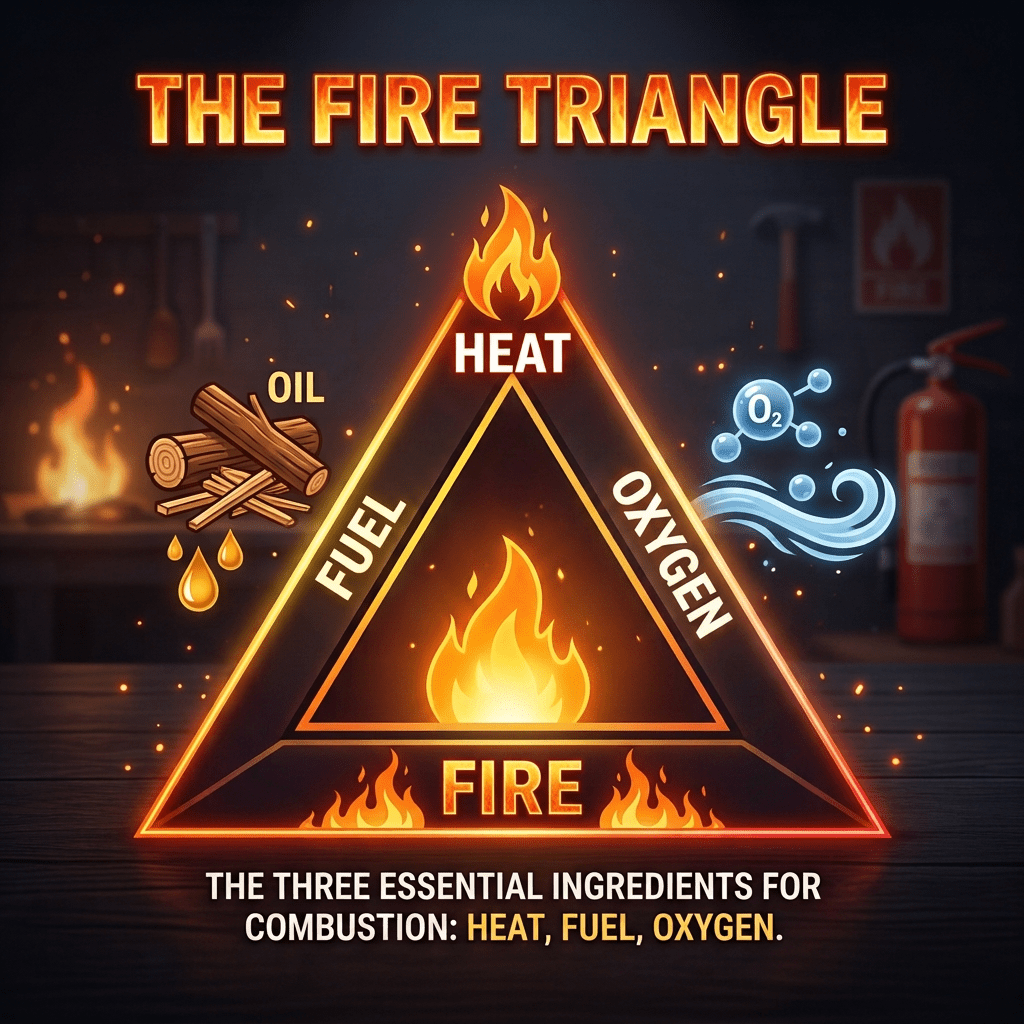
    Think about a campfire. To keep it going, you need three simple things: heat, oxygen, and fuel. Scientists call this the “fire triangle.” If you take even one of those away, the fire goes out, and you’re left with cold ash.

    Our minds work the same way. Whether you’re a student trying to learn something new or a parent helping them out, staying curious and excited about growth follows this same rhythm. To keep your “inner fire” burning, you have to know how to feed it, give it air, and light the match.

    Real change doesn’t just happen by accident. Just like a real fire, your personal growth depends on three main parts: Heat (the spark to start), Oxygen (your curiosity), and Fuel (what you’re learning)

    How to Get Things Moving

    To keep your momentum going, you need to let energy flow through four different types of fuel:

    Spark (Your Choice) → Tinder (Tiny Actions) →  Kindling (Your Routine) →  Logs (Big Goals)  →  Coals (Your “Why”)


    The Spark

    The Spark is just your decision; it’s your commitment. It’s that moment where you say, “Okay, I’m going to do this.”It’s tiny, but without it, the tinder (like opening a book, putting on your shoes, or in my case, writing the first outline) never catches fire. If you miss it, you can have the best plans and the best books, but without that one decision to strike the match, nothing happens. The decision to sit down right now and strike the match exclusively onto tinder. You don’t decide to “finish that report or project today”; you simply need to decide to take the first step and type one sentence.


    Heat: The Energy of Wonder

    Fuel just sits there unless something starts the reaction. In life, curiosity is what provides that heat. It’s asking, “What if?” or “How does this work?” That bit of wonder turns your potential into action.

    You can have the perfect amount of tinder, kindling, and hardwood and a gentle breeze providing the flow of oxygen, but nothing happens until you introduce heat. In science, that heat is the “activation energy” needed to get things started. For us, that heat is excitement and purpose. It’s that jolt you feel when you see a problem or a new skill and think, “I want to figure this out.” Allowing us to transition from being a passive observer to an active participant. Heat enables you to fully engage in the process.


    Oxygen: Fresh Ideas and Perspectives

    A fire can’t breathe in a closed container. Without fresh air, the flames just turn into smoke and go out.

    In our minds, oxygen is asking questions and listening. It’s easy to stick to what we already know, but a growing mind needs a “draft.” It needs us to listen to different ideas and welcome a good discussion. When we open up to new thoughts, we give our curiosity room to breathe.

    To keep the fire bright, try treating life like a science experiment. Try using the Scientific Method. That’s your oxygen. It just means trying something new, watching what happens, and thinking about the results. When you look at things this way, a “mistake” isn’t a failure—it’s just a clue. Adjusting your plan gives the fire a fresh breath of air.

    When you’re curious (oxygen is in excess), you do your work because you actually want to find a solution to a problem or just to see what happens. The question you ask yourself is: “What can I learn here that I didn’t know before?”

    When you’re just going through the motions, you’re just doing work to look smart or get it over with. When you’re just putting on an act, your efforts feel like a chore, and instead of a flame (heat),  you get just a pile of sticks.


    Fuel

    In our “campfire” model, your fuel is your love of learning. It’s your energy and beliefs just waiting to be tapped. Every fire needs something to burn. In your life, fuel is everything you’re taking in: books, hobbies, and even just observing the world around you.

    Learning doesn’t end when you leave the classroom. If you stop reading new things or trying new skills, you starve your “fire. To keep it going, you have to feed your mind with interesting stories, science, art, and new ideas every day.

    The Different Types of Fuel

    To keep your fire from going out, you can’t just throw everything in at once. Fire needs a specific order to work right. For example: If you throw a huge log on a tiny match, you’ll just squash the flame. If you only burn dry leaves, you’ll be striking matches all day without getting warm. To build a life that stays bright, you need to understand the four layers of your fuel pile.

    Tinder: Getting Started

    Tinder isn’t meant to last a long time. In our personal growth “campfire”, tinder is tiny, “No-Brainer” actions. Its only job is to get you off the couch and past that “I don’t want to do this” feeling.

    Since tinder is so easy to light, it doesn’t take much willpower. It’s just saying, “I’ll write one sentence,” or “I’ll just open my book.” Don’t try to plan your whole future with tinder; just use it to get things moving. For me, it’s opening this manuscript, reading the last sentence I wrote yesterday, or adding three bullet points to a chapter outline.

    Kindling: Building a Routine

    Once your tinder is lit, you need kindling. For students, this is your study habits; for the rest of us, this is our daily routines, the 30 to 90 minutes we spend actually focused on what we need to accomplish.

    Kindling turns that quick spark into real heat. Without a routine, our small decision to start an effort (tinder) just burns out.  Kindling keeps the flame alive until the big log catches. One session won’t finish a big project, but ten sessions in a row will. For me, it represents getting up early and spending 45 minutes writing, three days a week

    Hardwood Logs: Major Goals

    Logs are your major life goals, like graduating, writing a book, or mastering a hard skill. They contain a significant amount of energy but need a lot of heat to get started. They can give you personal success and satisfaction for a long time, but you can’t light them with a single match. You don’t just “start” with a log. You use your tender (decision) and kindling (habits) to build up enough heat until the log finally ignites. Once it does, it becomes a steady source of energy. You can’t just wish a big goal into existence. If you only focus on the massive finish line, you’ll just feel stuck. You have to work your way up. In my case, my hardwood “log” is a published, 60,000-word completed manuscript draft.

    The last consideration is one we do not often recognize to be part of our “campfire scenario, but is an absolute necessity for a successful, vibrant campfire: the bed of coals that exists under the burning fuel.

    The Bed of Coals: The “Why”

    Under the logs is the most important part of our personal growth campfire: the glowing coals. This is our core “Why”, the real reason we care about what we’re doing. This isn’t about grades or awards. It’s about your true desire to learn, to grow, and to help others along the way. When life gets hard, and the flames flicker, your “coals” stay hot. They keep your spirit alive so you don’t just give up, making

     it much easier to start the process again tomorrow. As long as your reasons are well grounded, you can always keep going.


    What Can Go Wrong

    1. No Oxygen (Just Going Through The Motions)

    Sometimes people just go through the motions. They aren’t curious anymore, and our life’s work starts to feel like a chore. That’s what happens when you cut off the oxygen. When you work without curiosity, it’s like closing the vent on a fireplace. You’re trying to burn wood, but you aren’t letting it breathe. Without air, you don’t get a nice warm fire. You just get a lot of smoke and feel drained. Working just because you “have to” feels like a waste of time. It leads to you feeling grumpy, bored, and tired of it all. You have to use raw willpower to get anything done. It’s exhausting, and you’re likely to give up once you get tired.

    1. Dying Coals (Burnout)

    Coals are what keep the heat steady. If you let your coals die and just try to keep a fire going with paper and twigs, you’re going to get burned out. This is like hustling really hard without a real reason. Without them, the fire goes out as soon as you stop feeding it. Working hard without a dream to support you takes a ton of effort. You get quick bursts of energy, but the moment you stop, you’re back to zero. Without your  “Why” (the coals), trying to stay motivated is exhausting. 

    1. Smothering the Fire (Feeling Stuck)

    Big logs need lots of heat to catch. You need tinder and kindling to build up the heat first.

    If you drop a huge log on a tiny match, it goes out instantly. This is like having big dreams without small habits to get you there. If you only think about the huge goal, you’ll feel overwhelmed. The goal is just too big to handle all at once, and you don’t know where to start. You don’t start with the log; you start with tinder. Trying to do too much at once just leads to feeling stressed and stuck.

    Troubleshooting the Problem

    If you feel stuck: Your goal is too big. Try starting with some tinder (tiny steps).

    If you’re busy but not getting anywhere: You’re burning through tinder but forgetting your kindling (habits and daily routines).

    If you feel burned out: You’re letting your coals die. Remember why you started in the first place.

    Final Thoughts

    You don’t finish a big project overnight. You do it by starting small, keeping a good routine, staying curious, and remembering why it matters.

    Staying curious is a skill you keep practicing, like tending a fire. By making sure your mind has plenty to burn, fresh air to breathe, and that spark of wonder, you can keep learning and growing your whole life. A well-tended mind doesn’t just help you—it shares its warmth with everyone around you.

    When curiosity, passion, and a little trial-and-error come together, they create something great. Your excitement starts the fire, your habits keep it going, and your curiosity keeps the air flowing, turning your hard work into real, lasting growth.