Musings of an Old Chemist

A Chemist's Perspective on the Habits and Skills STEM Students Need For Success

Tag: expectations

  • The Grade Illusion: Why High Test Scores Don’t Necessarily Equate With Concept Mastery (And How to Fix It)

    The Grade Illusion: Why High Test Scores Don’t Necessarily Equate With Concept Mastery (And How to Fix It)

    If you are an aspiring STEM student, or the parent of one, I want you to consider a terrifying possibility: It is possible to have a 4.0 GPA and know/retain almost nothing.

    I saw this contradiction in the students I would tutor. They were bright, hardworking, and ambitious. They had mastered the art of getting the “A.” They knew how to take tests, follow instructions, and allocate their time to receive a high score.

    However, if I asked them to apply a physics concept from two weeks before to a new problem assigned that day, they would freeze. Their knowledge of the material (data) was gone.

    This is the Grade Illusion. We have built an educational culture – especially in high-stakes fields like STEM, where the “High Score” has become the product. But in the real world, the test scores from high school and college courses are irrelevant. The only thing that matters is mastering the content.

    If you want to survive the transition from “A-student” to “successful scientist,” you need to understand how your own mind works. You need to stop renting knowledge and start owning it.


    The Knowledge Retention Misconception: RAM vs. Hard Drive

    To understand why intelligent students often feel like impostors, we need to examine how the brain stores information.

    Think of your brain like a computer. You have two types of storage:

    1. RAM (Random Access Memory): This is short-term, high-speed memory storage. It holds the data you need right now. It is volatile; when the power cuts (or the test ends), the data is wiped to make room for the next task.
    2. The Hard Drive: This is long-term storage. It is slower to write to, but the data remains there forever, ready to be recalled years later.

    The modern educational system encourages you to use your RAM, not your Hard Drive. We call this Cramming, or as we discussed in an earlier blog post, the act of memorization/regurgitation.

    When you cram for a calculus midterm, you are loading complex formulas into your RAM. You hold them there—stressfully—for 24 hours. You walk into the exam, dump the RAM onto the paper, and get a 95%. You feel successful. 

    But 48 hours later, that RAM is cleared to make space for Chemistry. The “Save to Hard Drive” function never happened.


    The Science of Forgetting

    This isn’t just a metaphor; it is a biological fact. In the late 19th century, psychologist Hermann Ebbinghaus mapped the “Forgetting Curve.”

    The curve shows that without deep processing (the struggle necessary to understand something), humans lose roughly 50% of new information within a day and 90% within a week.

    The student who crams and gets an “A” peaks at 100% on Tuesday morning. By next Tuesday, their retention dropped to nearly the same level as that of the student who failed. The grade is a record of what you knew for one hour, not what you carry into your career.

    From an economics perspective, consider this as the difference between Renting and Owning.

    • Cramming is Renting. You pay a high price in stress and sleep deprivation. You get to “live” in the knowledge for a day. But once the test is over, your “lease” is up, and you are evicted. You have zero equity.
    • Deep Learning is Owning. You pay a “mortgage” of daily, consistent study. It feels slower. It feels harder. But two years later, when you are designing a load-bearing bridge, for example, that physics principle is yours.

    The Illusion of Competence

    “But I got an A!” you might argue. “The test says I know the material.”

    Does it?

    In 1956, in the publication “Taxonomy of Educational Objectives: The Classification of Educational Goals,” a committee of educators chaired by Benjamen Bloom developed a framework to rank levels of understanding called “Bloom’s Taxonomy.”


    Shutterstock


    Most high school tests—and frankly, many college exams—operate at the bottom three levels: Knowledge (learn the formula), Comprehension (understand when to use the formula), and Application (plug numbers into the formula).

    If you are good at memorization, you can ace these tests without ever moving up the pyramid. But a career in STEM fields lives entirely at the top three levels:

    • Analysis: Why did the experiment fail?
    • Evaluation: Which method is best for this specific application?
    • Synthesize (Create): Develop an improved solution that isn’t in the textbook.

    The Illusion of Competence

    This creates the Illusion of Competence. You have a transcript full of “A’s” that certify you are an expert, but your internal drive has never been stress-tested at the “Analysis” or “Synthesis” level. When you eventually hit a problem that requires those skills, you don’t just struggle—you crash.

    The most dangerous side effect of the Grade Illusion isn’t academic; it’s psychological.


    The Performance = Identity Misconception

    When you spend your entire life chasing the “High Score,” you begin to associate your Performance with your Identity. You believe the equation: My Grade = My Worth.

    In STEM, this is lethal. In English class, a grade of “C” might seem subjective. In Physics or Chemistry, a “wrong answer” is objectively wrong. If you tie your self-worth to getting the right answer, every mistake feels like a character flaw.

    You need to adopt the mindset of a Scientist:

    • You are the Learning Process itself. You are the curiosity, the work ethic, the resilience.
    • The Grade is just Data. It is simply the output of a single, specific experiment on a single specific day.

    For example, if a Ferrari engine performs poorly because it had bad fuel, we don’t say the engine is trash. We say the input (fuel) was wrong. Similarly, if you fail a test, it doesn’t mean you are broken. It means your variables—your study habits, your sleep, your preparation—were off.

    A bad grade is not your identity. It is guidance.


    Breaking the Cycle

    Ready to shift from being a “Grade Hunter” to a true “Learner”? Use these two simple techniques to pinpoint where you are in that transition and determine the necessary steps to move forward.

    1. The “Two-Week Audit.”

    I challenge you to a challenging experiment. Take a test you aced two weeks ago. Sit down and take it right now, without reviewing your notes.

    The difference between your score then (95%) and your score now (55%) is your Fake (Lost) Knowledge. That 40-point gap represents wasted energy. It is time spent renting, not owning. If the gap is huge, your study method is broken, regardless of your GPA.

    2. The Feynman Technique (The Ownership Test)

    Physicist Richard Feynman had a simple rule for understanding, which he borrowed from Albert Einstein. To prove you have mastered a concept, you must be able to explain it in simple language, without jargon, to someone who has no background in the topic (like a smart 12-year-old).

    If you can’t explain it simply, you don’t understand it. You have only memorized the definition. You are stuck at the bottom of Bloom’s Taxonomy.


    The Bottom Line

    The world is full of influencers and algorithms showing you the easy way to obtain a high test score on the ACT and achieve the most sought-after degrees, jobs, and accolades. Yet they rarely show you how to retain the knowledge required for long-term success.

    Success in STEM requires three “old school” prerequisites that cannot be skipped: Curiosity, a Passion for Learning, and a Passion for Solving Problems.

    If you have these, the grades will eventually follow. But more importantly, later in life, when the grades stop mattering, the expertise will remain.

  • Essential Skills for Success in STEM: Initiative, Resolve, Perseverance, Resilience

    Essential Skills for Success in STEM: Initiative, Resolve, Perseverance, Resilience

    You may be doing well in your math and science courses, or perhaps you’re already interested in areas such as computer programming, robotics, or video game design. While a passion for STEM and strong academic performance are certainly vital, true success in these fields requires more than just intelligence.

    The key drivers—the qualities that will propel you through challenging projects, demanding courses, and even career setbacks—are the four absolutely vital tools in your personal growth toolkit for anyone charting a course in STEM: Initiative, Resolve, Perseverance, and Resilience.


    What is Initiative, Resolve, Perseverance, and Resilience? 


    1. Initiative

    What it is: The ability to self-start, take action without being told, and seek out new opportunities or skills.

    Why it matters in STEM: The STEM fields are constantly evolving. What you learn today may be outdated in five years. Initiative is crucial for lifelong learning—the willingness to constantly teach yourself new skills (computer programming, robotics, advanced data analysis, or new analytical instrumentation) to remain current and competitive in the industry.

    When performing research or problem-solving, it takes initiative to troubleshoot errors, design a better experiment, or learn to use a new piece of equipment before it’s required. It’s what drives you to excel.

    Example: Your Chemistry professor assigns an open-ended laboratory project. The explicit expectation is a successful, unique final product. You must show the initiative to search for resources, organize the necessary equipment and reagents, and learn to operate the necessary tools needed to complete the project because the assignment demands it, not just because you feel like it.


    2. Resolve

    What it is: A firm determination to achieve a specific goal, resisting distractions, and maintaining focus even when things get tough. The unwavering focus needed to complete a difficult project, solve a complex equation, or commit to the years of study required for a specialized field of study.

    Why it matters in STEM: STEM fields demand long-term commitment. Resolve is what helps you stay committed to completing that difficult assignment, even when exhaustion hits. Push through a difficult physics derivation, knowing the understanding will unlock new perspectives. See past a frustrating semester or a challenging first-year chemistry, physics, or math course, reminding you of your ultimate career aspirations. It’s the inner conviction that keeps you on track.

    Example: Introductory college courses, such as Organic Chemistry, Physics, and Calculus, are often intentionally challenging to test your preparedness to succeed in upper level courses. When faced with a low grade, resolve is the quality that prevents you from abandoning your major. Initiative is the drive to seek out help by finding a tutor, joining a study group, or meeting with the professor to grasp the material you do not understand, instead of simply giving up.


    3. Perseverance

    What it is: The sustained effort to keep working despite difficulties, serving as the dedication required to solve tough problems through hours of calculations, research, or repeated experiments. It’s the long-term, consistent effort.

    Why it matters in STEM: STEM is rarely a straight line to success. Perseverance means spending countless hours debugging computer programming, even when you’re convinced it’s flawless. Re-running an experiment five times because you’re confident there’s a pattern you’re missing. Staying up late to understand a complex mathematical concept until it finally clicks.

    Example: You struggle with a Chemistry laboratory assignment and are tempted to give up. Your instructor intervenes, not by giving you the answer, but by offering a small suggestion, confirming the difficulty of the task, and requiring you to follow up in an hour. This structured support prevents you from feeling abandoned in your efforts, reinforces the importance of struggle, and teaches you the value of perseverance.

    While the ultimate decision to continue is yours, external factors, the support from your instructor, are essential. The setting of an expectation, the modelling of how to continue in the process, and the structured support act as powerful motivations, transforming your ability to just keep going into an established, automatic behavior (perseverance).


    4. Resilience

    What it is: The capacity to recover quickly from setbacks, disappointments, or outright failures, viewing setbacks not as defining moments but as valuable data and learning opportunities. 

    Why it matters in STEM: Failure isn’t a setback in STEM; it’s a feature. Scientific discovery often involves many “failed” experiments before a breakthrough. Resilience allows you to: bounce back from a low test score, analyze what went wrong, and adjust your study habits.

    Example: It can be challenging for you to picture what “resilience” looks like. Mentors provide a crucial model. When you witness your research advisor’s experiment fail, and instead of getting discouraged, your advisor calmly analyzes the data, identifies the potential sources of error, and immediately starts correcting the issues for the next trial run. These actions model resilience and teaches you how to respond appropriately to setbacks.

    STEM fields are characterized by constant challenges and an emphasis on complex problem-solving. Success relies less on your natural talent and more on your willingness to engage in a productive learning process. And that success rarely comes on the first try. It is common for an experiment to produce unexpected results or a mathematical proof to contain an error. Instead of seeing these setbacks as personal shortcomings, students need the mindsets of resilience and perseverance to see a failure as a starting point.


    Is Initiative, Resolve, Perseverance, and Resilience a Personality Trait or a Learned Skill?

    Initiative, resolve, perseverance, and resilience are generally understood as learned behaviors. Psychologists like Carol Dweck argue that these qualities stem from a Growth Mindset—the belief that our abilities and intelligence can be developed, rather than a fixed personality trait.  While some people might appear naturally more determined to manage and learn from their struggles, everyone has the capacity to develop these essential skills. 

    Think of initiative, resolve, perseverance, and resilience as learned skills that, when practiced consistently, become an integral, defining part of your character or personality. For a STEM student, it is critical to recognize the value in treating them as skills that require deliberate practice.


    The Power of Role Models, Mentors, and External Expectations

    The skills of initiative, resolve, perseverance, and resilience isn’t something you can achieve entirely on your own, however you can always begin the process. The most effective and the smoothest path to growth in these areas requires external guidance. Role models, mentors, and the right external expectations act as a vital catalyst in forging these qualities.

    How do role models, mentors, and external expectations cultivate these critical skills? Here are four key examples:

    Observation: Professors, Mentors, and Role Models provide critical “how-to” knowledge. Observing an experienced chemist handle an instrument failure calmly or a scientist gracefully accept and learn from a failed experiment offers a real-world demonstration of resilience and perseverance in action.

    Accountability: External expectations, whether it is from a professor, mentor, or a course syllabus, establish defined goals and deadlines that require action. Taking on a challenging project with its external pressures, its deadlines and reporting requirements, serves as a catalyst. It triggers the initiative needed to start and, crucially, builds the internal resolve and strength required for sustained effort toward completion.

    A Defined Strategy for Success: Effective teachers and mentors avoid simply giving answers. Instead, they offer focused, constructive feedback, guide individuals through roadblocks, and recognize small achievements. This strategic support reinforces successful behaviors, driving long-term competence and success.

    Reinforcement and Feedback: These critical skills are only learned effectively when you receive balanced feedback from your professors and mentors, parents as well – positive reinforcement when you suceed and constructive criticism when you fall short. 


    A Strategy for Your Personal Growth and Success

    As you navigate your academic life and plan for a career in science, technology, engineering, or math, your focus must extend beyond formulas and facts. You need to actively look for opportunities to develop your initiative, resolve, perseverance, and resilience. So take action with the following approach:

    1. Embrace the Hard Stuff: Never shy away from difficult assignments or complex projects. Challenges are opportunities in disguise.

    2. Treat Failures as Data: Every setback is not an end, but a valuable data point. Analyze what went wrong and adjust your approach.

    3. Actively Seek Mentors: Find someone whose approach to challenges inspires you, and commit to learning from their wisdom and experience.

    4. Practice Self-Reflection: When things get tough, take a moment to ask yourself: How did I react? What could I do differently next time?


    Conclusion

    These qualities are not just career buzzwords; they are the foundation of personal growth and the essential fuel for scientific discovery and innovation. The combination of strong grades and these four psychological attributes is what ultimately separates a good student from future success in their career path, capable of making a difference in a STEM field. Cultivate them, and you will do more than just succeed in STEM; you will thrive in every aspect of your life.

  • Self-assessment Exercise Four: Practicing the Art of Self-reflection and Evaluating Your Openness for Change 

    Self-assessment Exercise Four: Practicing the Art of Self-reflection and Evaluating Your Openness for Change 

    For your consideration:

    “You know, to be able to do something great in your life, you’re gonna have to realize your failures. You’re gonna have to embrace them and figure out how to overcome it.” 

    – Dave Chappelle


    Introduction


    Honest self-reflection is a precursor to self-awareness and the starting point for our discussion of personal growth. To start to know yourself, you need to consider who you are and what’s important to you at this point in your life. This is the final of four exercises designed to encourage you to take the time to think about and identify your goals and motivations. This exercise is designed to help you understand the forces driving your pursuit of a key personal or professional goal. It may help you know yourself better, figure out your goals, and make more informed decisions about your future. It may also help you to develop a stronger sense of purpose and direction in life. 


    Key Points to Remember

    Be honest with yourself; there are no right or wrong answers, and no judgment is attached to your responses.

    Take your time with these exercises, thinking about what is important to you and why.

    As you work through each prompt, take a moment to record your thoughts. These reflections serve as a valuable resource when developing self-awareness.


    Self-reflection and Your Openness for Change


    Prompts


    Prompt #1: 

    Think back over the past year. List one thing that you wish you could do over. Did you react harshly to a person’s comments or criticize someone unfairly? Were you given an opportunity to display your talents and skills or asked to do something meaningful and, for whatever reason, failed to meet expectations? Is there a decision you made whose consequences did you more harm than good? If so, what did you learn from the situation? What could you have done differently? If this is a repeating occurrence or behavior, are you willing to and how do you intend to change your behavior in the future?


    Prompt #2:

    Is there someone in your past who has left a lasting impression due to their constant support and guidance? This person consistently stood by you during times of need, providing advice, emotional and financial assistance, all without expecting anything in return. Someone who may not have said what you wanted to hear at the time, but precisely what you needed to hear. How did you respond to their guidance: were you grateful for their wisdom, or did you harbor resentment? Do you consider this person to be a role model for you? If so, how have these interactions changed your perspective on life and working with others?


    Prompt #3

    List three things you value most regarding your personal growth, for example: Faith, Family, Financial Freedom, Recognition, Success. Now, look back at the past 2 weeks, what was your time investment on your personal growth process? How many hours did you dedicate to activities directly serving these three values? Which activity or relationship gave you the greatest sense of satisfaction or positive reinforcement (exothermic growth)? Was there a drain on your energy levels (endothermic growth)? What activity or relationship consumed the most of your emotional or mental energy, often leaving you depleted?


    Self-assessment Conclusion


    You’ve completed the vital work of moving from self-reflection to action by honestly considering answering these questions. You’ve identified and acknowledged any recurring failures and regrets (Prompt #1), influential mentors and guidance in your life (Prompt #2), and, most importantly, evaluated your personal energy investment (Prompt #3).

    As discussed in a previous blog post, the Law of Conservation of Energy applies to personal growth: you cannot generate more personal energy; you can only reallocate it to different endeavors. 

    Your life is subject to this law. Every time you dedicate mental or emotional energy to low-value activities or relationships that drain you, you’re experiencing endothermic growth; that energy is simply lost.

    Conversely, when you commit to activities aligned with your most important values—such as your faith, mastering concepts or talents, your family, or financial desires – you’re exhibiting exothermic personal growth. You’re releasing your stored personal energy, producing serious personal growth. While these endeavors may be challenging in the moment, this process (perseverance and resilience) builds the person you truly desire to be.

    With the four parts of your self-assessment now complete and your answers identified, the crucial next step is to actively pursue the traits, habits, and desires that will help you become your best self. We all need, no, we all must, stop passively waiting for change. So utilize this blueprint of your values and begin, right now, to invest your personal energy in becoming the person you desire to be.

  • Self-assessment Exercise Three: Identifying Your Expectations and Beliefs

    Self-assessment Exercise Three: Identifying Your Expectations and Beliefs

    For your consideration:

    “Lower expectations do not lead to happiness, no matter how often they are met.”

    – Michael Jordan


    Introduction


    Honest self-reflection is a precursor to self-awareness and the starting point for our discussion of personal growth. To start to know yourself, you need to consider who you are and what’s important to you at this point in your life. This is the third of four exercises designed to encourage you to take the time to think about and identify your goals and motivations. This exercise is designed to help you understand the forces driving your pursuit of a key personal or professional goal. It may help you know yourself better, figure out your goals, and make more informed decisions about your future. It may also help you to develop a stronger sense of purpose and direction in life. 


    Key Points to Remember

    • Be honest with yourself; there are no right or wrong answers, and no judgment is attached to your responses.
    • Take your time with these exercises, thinking about what is important to you and why.
    • As you work through each prompt, take a moment to record your thoughts. These reflections serve as a valuable resource when developing self-awareness.

    Expectations and Beliefs


    Description of the Types of Expectations

    Expectations can be broadly categorized into two types: internal (intrinsic) and external (extrinsic). While there are subtle distinctions between internal and intrinsic, and external and extrinsic, for clarity in this explanation, I will group them together.

    Internal (intrinsic) Expectations

    Internal (Intrinsic) expectations originate within you. These are the personal standards that influence your behavior, performance, and character. They can take various forms. These might include physical goals, such as training for a marathon; a commitment to daily habits like a 10-minute meditation; value-based principles like kindness and honesty; or quality standards, such as the expectation that your work will be perfect when you submit it.

    Your motivation to meet these expectations stems from intrinsic factors such as your personal values, ambitions, self-worth, and the desire for self-improvement. The primary reason is often the desire to meet your own standards for mastering new content or ideas, exploring your passions and interests, your process of personal growth, and a sense of satisfaction. For instance, you might set an expectation to practice the guitar for an hour daily, motivated purely by the love of improving and the music itself, finding your reward in the satisfaction you receive from the activity.

    External (extrinsic) Expectations

    External (extrinsic) expectations originate from outside yourself. They are standards, rules, or requests set by other people, your parents, friends, coworkers, or society in general. For example: a deadline for a project (either in class or at work), your parents or a spouse’s request for you to do a specific household chore, a job description or class syllabus listing how your performance at work or class will be measured, or perhaps a societal standard on how you “should” behave, dress, or define success to be accepted. At its core, with external (extrinsic) expectations, your primary desire is often to meet the standards of others.

    Accountability to others, the pursuit of rewards like promotions or praise, and the avoidance of negative consequences such as disapproval from parents, friends, or bosses, poor grades, or losing a job, are often key internal (intrinsic) motivators for meeting external expectations. External (extrinsic) motivations, by comparison, are generally less fluid and flexible because changing the expectations of others requires you to negotiate the terms of the expectations and seek agreement with another person.

    Bottom Line 

    Your expectations need to be realistic and attainable, plus align with your personal goals and ambitions. You must remain true to yourself and your beliefs and core values, regardless of how difficult it may seem at times. Negotiating expectations is a major component of the personal growth process.


    Prompts


    Prompt #1: 

    Whose expectations have the strongest influence on your life, and that you feel obligated to meet? Are they aligned with your own beliefs and desires? How do you manage those expectations and stay true to your dreams and goals?


    Prompt #2:

    List three things you expect from yourself (for example, I expect myself to spend 30 minutes each day writing). How do these expectations impact your daily decisions and actions? Does meeting your expectations give you self-confidence and encourage you to do more? Or do these expectations overwhelm you? 


    Prompt #3: 

    Think about a recent time when you exceeded an expectation. Did you take time to acknowledge and celebrate that success? If not, why? Recognizing your “wins” is an important component of self-care.


    Prompt #4:

    Think about your expectations for others (friends, family, or people in general). Are these expectations realistic and attainable? How do they align with what you expect from yourself, your goals, and your beliefs? 


    Up Next: Practicing the Art of Self-reflection and Evaluating Your Openness for Change 

    The last set of prompts, part four of the series, will ask you to practice the art of self-reflection and evaluate your openness for change.

  • The Personal Growth/Chemical Reaction Analogy

    The Personal Growth/Chemical Reaction Analogy

    Key Concepts 


    Key Concept Number One: The Law of Conservation of Energy

    The law of conservation of energy applies directly to our campfire analogy by stating that all the chemical potential energy stored in the wood must be accounted for after it burns—it doesn’t just disappear, it’s simply transformed into different forms. The total energy of the heat, light, and the chemical bonds of all the byproducts is equal to the original chemical potential energy stored in the wood. No energy is lost; it has just been converted.

    In our discussion of the process of personal growth, the conservation of energy also applies. The personal energy we invest in the process — our time, focus, and emotion — is finite and must be transformed into something: either a product (your desired outcome of success) or byproducts (either intended (positive) or unintended (negative) emotional or psychological consequences of the process).


    Key Concept Number Two: The Definition and Role of an Indicator

    An Indicator in our chemical reaction/personal growth analogy is a measurable, observable, and immediate sign that the reaction mechanism is proceeding effectively and that the energy input (activation energy) is being successfully converted into the desired products. Essentially, it tells you if and how well the process is working.

    The indicator in our campfire analogy is a sustained flame producing heat and light. This is the visual and thermal evidence that the wood’s stored chemical energy is successfully converting into usable thermal and radiant energy (Heat and Light). It immediately informs us that the Activation Energy (the match/lighter) was successful and the Reaction Mechanism (the burning of the reactants) is self-sustaining.

    In the process of personal growth, self-awareness acts as an indicator. It is the ability to recognize and reflect on the state of our emotions, how effective we are in our learning process (informing us if our study habits/self-discipline are effective), and understand our behaviors. Without self-awareness, personal growth becomes a random and inefficient endeavor. It’s like “throwing ideas up against the wall to see what sticks,” a process that lacks crucial elements. This leads to a frustrating trial-and-error approach, wasting valuable time and energy.

    Therefore, self-awareness is the foundational component of our personal growth, enabling us to identify and appreciate new skills, confidence, and competence as they emerge. Simultaneously, self-awareness is crucial for detecting and managing negative byproducts like stress, frustration, or burnout, preventing them from halting the entire growth process.


    Breaking Down the Components of Our Campfire vs Personal Growth Analogy

    Let’s define start by defining our chemical reaction process as the following:

    Reactants + Catalyst + Activation Energy – Initiates – Reaction Mechanism – Yields – Products + Byproducts


    Supplies 

    What items in the campfire example or which skills in the case of personal growth, do we need to accumulate before starting each process?

    For the campfire analogy, we need: paper and kindling (small twigs and branches) to get the fire started, larger pieces of wood (logs) to serve as the fuel, and matches or a lighter to introduce heat to ignite the flame.

    Personal growth demands a combination of essential resources and skills. Essential supplies include strong communication, critical thinking, and time management skills. Additionally, we need an inherent sense of personal accountability and access to various resources such as time, money, and mentors. Information resources, whether online, textbooks, or coursework, are also crucial. Finally, a secure and supportive environment is vital for this process.


    Personal Commentary The Importance of a Safe, Secure, and Supportive Environment

    During my tine teaching middle school science, I was mentored by a teacher who advocated for a pass/fail grading policy for students during their middle school years, grades 6-8. He believed that the significant emotional and developmental changes experienced by students aged 12-15 made it more important to focus on building essential communication, study, time management and critical thinking skills rather than pressuring them with specific grade requirements. He also pointed out the growing number of students facing poverty, living in single-parent homes, living in fear of abuse, and dealing with various crises, leading to a lack of sufficient rest, parental support, and proper nutrition. Citing Abraham Maslow’s Hierarchy of Needs theory, he argued that these stressors needed to be addressed before students could be expected to achieve academic excellence in the classroom.


    Reactants (Campfire vs the Process of Personal Growth Analogy)

    For our campfire analogy, the reactants are straightforward; they consist of wood (fuel), which is the source of stored potential energy, and oxygen.

    Personal growth is fueled by key personality traits. These “reactants” include creativity, an open-mindedness to new ideas, a passion for learning and problem-solving, and the crucial ability to persevere through obstacles.


    Indicators

    In the campfire analogy, the sustained flame’s heat and light serve as the indicator, visually confirming the reaction is occurring and progressing.

    Self-awareness serves as a crucial metric for our dedication to personal growth. This dedication is shaped by our curiosity, persistence, and the joy we experience from the process, As lifelong learners, our progress in these areas can be measured through our academic or career achievements.


    Activation Energy

    In the campfire analogy, the initial heat needed to ignite the paper or kindling acts as the activation energy for the combustion reaction. This reaction involves the burning of fuel (wood) in the presence of oxygen, which produces heat and light. A flame from a lighter or matches provides this initial activation energy, initiating the reaction. Once started, the heat generated by the burning wood sustains the reaction, causing subsequent additions of fuel to ignite.

    Personal growth begins with activation energy—our initial investment of effort, time, and focus. This crucial first step helps us overcome our reluctance to start new projects, defeat self-doubt, and combat our natural inertia, our resistance towards change. It requires aligning our personal goals with both our internal motivations, our drive to engage in an activity purely for the inherent pleasure, satisfaction, or challenge it provides, and external motivations, our drive to perform an activity in order to achieve rewards, praise, money, grades, status, or to avoid negative consequences (like failing a class, being grounded, or later in life, getting fired from our job).


    Catalysts

    (Important: by definition,a catalyst is never used up or depleted in the reaction process.)

    If you have ever had to build a campfire you may recognize this catalyst in the campfire analogy, it is the absolute dependence on the flow of air around and through the campfire itself. This airflow is the mechanism that speed up the process of burning, providing access to the oxygen crucial to the combustion process.  

    Personal growth is driven by catalysts, which include the foundational steps of the personal growth “building” we discussed in a previous blog post, our dreams, aspirations, and goals. These are combined with both intrinsic expectations (how we expect ourselves to progress) and extrinsic expectations (the expectations of family and others) to propel us forward in our personal growth journey.


    Reaction Mechanism

    In chemistry, a reaction mechanism is the step-by-step sequence of elementary reactions that leads from reactants to products. It’s the detailed path the reaction takes. When we apply this to personal growth, the reaction mechanism is not a single, fixed procedure but a continuous, self-correcting process.

    In our campfire analogy, the reaction process is a combustion reaction, the process of combining fuel and oxygen with the activation energy provided by the match or a lighter, to initiate a chemical reaction that produces heat and light as products.

    Personal growth is a journey towards a goal or personal transformation, much like a chemical reaction. It involves a methodical process of learning, similar to the scientific method, where knowledge is gained and applied through observation. This leads to the development of strategies, which are then implemented through habits, discipline, and focus to transform effort into skill. Ultimately, this process enables us to identify and conquer obstacles.


    Products

    We define a product as the desired output of a process, or the desired outcome of success.

    In the campfire analogy, the products are heat (thermal energy) and light.

    The desired outcome of personal growth is multifaceted, encompassing skills and competencies, such as mastering a trade, or individual definitions of success, like a specific title or salary. Ultimately, however, I would argue, we should strive in the long-term to gain in wisdom.


    Byproducts

    A campfire’s combustion reaction produces unintended and undesirable byproducts: ashes, which are mineral waste, and smoke, a form of air pollution consisting of uncombusted particles.

    Our personal growth journey, unlike a chemical reaction, yields byproducts that can be either positive or negative, depending on the nature of the growth itself. When we engage in what we call “exothermic growth,” our investment of personal energy results in a positive return or outcome. This beneficial growth produces desirable byproducts such as compassion, critical thinking skills, humility, and resiliency.

    Conversely, “endothermic growth” occurs when we invest more personal energy than we receive in return. This imbalance can lead to negative, unintended emotional or psychological consequences, including anxiety, burnout, fear, frustration, and stress.

    Therefore, self-awareness is crucial. It enables us to identify and prioritize rewarding, exothermic activities while simultaneously recognizing and minimizing endothermic activities that drain our personal energy and are misaligned with our personal goals and ambitions.


    Conclusion

    In conclusion, just like a well-tended campfire provides warmth and light, a mindful approach to personal growth can yield profound and lasting benefits. By understanding the “chemistry” of our own development—recognizing the needed components, our supplies, reactants, and the crucial role of activation energy and catalysts—we can more effectively guide our journey. Cultivating self-awareness allows us to prioritize “exothermic growth” and minimize the less desirable “endothermic” byproducts, ensuring our personal evolution is not only productive but also sustainable and deeply rewarding.

  • Using the Scientific Method to Overcome Adversity

    Using the Scientific Method to Overcome Adversity

    Every one of us, at some point in our lives, will face adversity and failure. Times when we fall short of expectations, whether it is the expectations others have for us or the expectations we have for ourselves. As students, it may be a poor exam grade, an incomplete or missed assignment, or even failing a course. You may fail to get the ACT score you need, or fail to be admitted to the college you desire. As adults, we may face setbacks like a failed job interview or missing out on a position we covet. A negative annual performance review could mean not getting the raise you feel like you deserve. Relationships and marriages can fail, and communication breakdowns can leave us questioning what went wrong. Life inevitably brings challenges: the loss of loved ones, health concerns, retirement, and the realization that we’re not as young as we used to be. The key lies in how we choose to confront these difficulties.


    The Scientific Method’s Role in Dealing With Adversity

    Most of us are familiar with the scientific method, a cornerstone of science education from middle school through college. For those who need a refresher, the scientific method consists of five steps or actions: Observation, Question, Hypothesis, Experiment, and Analysis/Conclusions.

    How Can I Use the Scientific Method to Deal With Adversity? 

    I would argue that the key step is observation, being able to separate yourself from the emotion and act as an outside viewer of the situation, watching without judgment. Observation combined with self-awareness, asking yourself, “What are my strengths?, “What are my weaknesses?”, and “What truly motivates me?” These are the essential principles in applying the scientific method to adversity. It’s the perspective that allows you to treat a challenge not as an attack on you, but as a problem to be solved. 

    Once you accept this attitude and put it into practice, the scientific method becomes a powerful tool for dealing with adversity, changing it from an emotional crisis into a manageable process of observation and experimentation.


    Real-life Example: You get a “D” on your chemistry assignment.

    Step One: Observation

    Adversity strikes, and your first step is to resist the emotional pull to react immediately. We often make the situation worse by reacting without thinking, responding in ways we’ll come to regret later. Not just in our words, but in our actions and decisions we make in the moment. We need to take a step back and become an objective viewer of the situation at hand. 

    First, you observe the situation without being judgmental or emotional, asking yourself:  

    “What are the facts of this situation?” 

    Break the situation down, make an objective, non-emotional analysis. The assignment was due three days ago, and I submitted it today, three days late. The classroom policy is that for every day an assignment is late, there is a letter grade penalty.

    “What are the emotions am I feeling?” 

    Angry, I worked really hard on this assignment. Embarrassed, all my friends got better grades than I did.

    “What thoughts are running through my  mind?” 

    My teacher is just being mean; he doesn’t like me, and he’s picking on me. And this policy is really unfair.

    “What are the other variables at play?”

    I spent my time playing a new video game I just got instead of working on the assignment. I struggle with procrastination, putting off all my assignments until the last minute.

    As you gather information, treat your emotions and thoughts as “data” points rather than truths to be acted upon.

    Step Two: Identify a Question

    From this place of calm observation, you formulate a specific, solvable question. Instead of asking, “Why is this happening to me?”, you ask, “What is the real problem I need to solve here?” This question must be objective and actionable, similar to a chemist asking, “What are the souces of error causing this reaction to fail?”

    For this situation, your core problem you need to solve is that you procrastinate.

    Step Three: Create a Hypothesis

    Next, you develop a theory about how to approach the problem. This is your educated guess about a potential solution. Your hypothesis is a path forward, a specific action you will take to test your theory. It might sound like this: “If I communicate my feelings calmly and clearly, then I can find a resolution to this conflict.” Or, “If I study more, then I will do better on my exam.”

    Because you struggle with procrastination, you may decide to start on an assignment the day it is assigned, or do your work at the dining room table, not in your room where you’re easily distracted. Maybe ask your parents to help or ask a friend to be a “study buddy” to help keep you accountable.

    Step Four: Perform an Experiment

    This is where you put your hypothesis into action. You take a deliberate, measured step to test your theory. The experiment isn’t a rash decision; it’s a controlled action designed to provide data. You act or change your behavior, and you carefully observe the results.

    For example, for the next assignment, you decide to test your hypothesis by starting the day it is assigned and doing your work at your kitchen table, not in your room.

    Step Five: Analysis & Conclusion

    After the experiment, you analyze the results. Did your new approach work? Did the situation improve, or did your emotions shift in a positive way?

    Based on the analysis, you draw a conclusion. If your hypothesis was correct, you’ve found a new, effective way to handle that specific type of adversity. If it wasn’t, you haven’t failed; you’ve simply gathered new information. That new information allows you to formulate a new hypothesis and start the cycle over again.


    While it is not always easy, assuming responsibility for our failures and admitting our shortcomings never is, by applying this systematic, analytical approach, you may find that adversity is no longer a personal attack. It becomes a solvable problem, and you become the master architect who learns from every challenge and uses that knowledge to become a stronger, more resilient you.

  • Weekly Quotation: August, 6, 2025: Rethinking Education to Prioritize Personal Growth

    Weekly Quotation: August, 6, 2025: Rethinking Education to Prioritize Personal Growth

    “We are a culture that worships the winning result: the league championship, the high test score. Coaches are paid to win, teachers are valued for getting students into the best colleges. Less glamorous gains made a long the way – learning, wisdom, growth, confidence, dealing with failure – aren’t given the same respect because they can’t be given a grade.”

    – William Zinnser (On Writing Well, 30th edition) (pg. 253)

    I wonder if the same can be said about the process of personal growth. I am absolutely certain that there are teachers whose passion lies in seeing they’re students grow as people of substance, encouraging their passion for learning, challenging students with inquiry-based lessons. I know this because I have worked alongside many of them. However, the pressure to meet state and federal established testing benchmarks by which schools are judged and state curriculum standards leaves little time for creativity and discussion in the classroom. So many feel like they are fighting a losing battle. And it not only these restrictions that affect the development of our students’ personal growth in the classroom.

    I have also experienced a paradigm shift in the STEM students I work with. While there are still some who are open to new ideas and are willing to explore and develop the foundations of personal growth: curiosity, a passion for solving problems, and a passion for learning. There is a growing majority of students whose primary interest is in just getting the grade, whose focus is on getting the highest ACT score possible, not through learning the baseline knowledge to support the score, but only in the quick techniques to “cheat” the test with the least amount of effort. And, with minimum ACT test score standards being implemented in school systems as graduation requirements, schools now offer courses teaching these methods. ” Memorize and forget” is now the status quo for many of our students.

    We are doing a disservice to our students. For when they get to college, and especially when they graduate and join the workforce without a solid foundation in knowing how to deal with failure, learn from their mistakes, develop a strong support network, to be resilient and to persevere – essential skills and traits that cannot be given a grade – I guarantee you they will struggle.

  • Unlocking Your Personal Growth: Motivations and Expectations

    Unlocking Your Personal Growth: Motivations and Expectations

    Throughout our lives, we are constantly asked, “What do you want to do?” “What are your goals?” and “What do you expect to achieve?” These aren’t just questions in a job interview or at a parent-teacher conference; they are at the heart of our motivations and expectations.


    Motivations: The Source of Your Personal Growth Blueprint

    Motivations are the “why” behind your work. Think of them as the desire that inspires you as the architect of your personal growth —the deep, personal reasons you to start your personal growth journey in the first place.

    Why do you wake up every morning and choose to work hard? Is it to solve a problem that fascinates you, to help others, for financial security, or to gain recognition? The reasons we tackle any task are our motivations. Knowing what truly motivates you is the difference between building a life that fulfills you and simply going through the motions. Without understanding your motivations, you risk creating a blueprint that someone else designed for you, leaving you feeling empty even after you’ve “finished” the job. Your motivations are your fuel. They provide the passion and perseverance necessary to overcome challenges and bring a vision to life.

    Intrinsic Motivation

    Intrinsic motivation is deeply personal and originates from within us. It is a dynamic force that drives us to participate in activities simply for the joy and satisfaction they bring. This type of motivation is closely tied to our dreams and aspirations. It is what pushes us to achieve personal goals, pursue our passions, and continuously work to improve ourselves. When you’re driven by what you truly want and value, not just other people’s demands, you feel in control and that you’re making your own choices.

    Extrinsic Motivation

    On the other hand, extrinsic motivation comes from outside influences and the rewards they offer. You do the activity not because you enjoy it, but because of what you’ll get from it, whether that’s something you can touch or something less tangible. These benefits could include things like grades, praise, recognition, money, or social status. While extrinsic motivation can be a useful tool for achieving specific goals, it is important to recognize that it can also have its limitations. If we completely rely on extrinsic motivation, not on our desires and expectations, it can leave us feeling unsatisfied, empty, even though we have achieved the benefits we were seeking.

    How They Relate to Each Other

    What really drives us comes from both intrinsic and extrinsic motivations. We might do things just because they make us feel good or because we’re curious (that’s intrinsic). Or, we might do things for external reasons, like getting a bonus or to get an “A” on a report card (that’s extrinsic). Usually, it’s a mix of both. Take getting a master’s degree, for instance, you might want the opportunity to learn and grow (intrinsic), but you may also think about the better job opportunities the degree provides and the more money you can make (extrinsic).

    Striking a balance between intrinsic and extrinsic motivation is often the key to achieving long-term success and happiness. While external rewards can provide a temporary boost, it is the internal drive and passion that sustains us over time. It is important to cultivate your intrinsic motivation by identifying activities that you genuinely enjoy and find meaningful. This may involve exploring our interests, discovering your passions, and setting personal goals that align with your values.

    To truly understand our motivations, we must also practice the art of self-reflection. This means asking yourself tough questions about what drives you, what rewards are you seeking, and if your motivations align with your fundamental values. As you grow, your motivations change, so it’s an ongoing process. You’ll need to regularly check if what drives you still aligns with your goals and helps you feel good overall.

    When we get to know ourselves better and understand what really motivates us, we can make smarter decisions, set goals that truly matter, and live a life that feels more deliberate and fulfilling. Just remember, real motivation comes from within, and that inner drive is what helps us reach our full potential.


    Expectations: The Specifications of Your Personal Growth Blueprint

    While motivations explain the “why,” expectations clarify the “what” and “how much,” serving as precise specifications on a blueprint. Expectations come from two sources: external expectations, which are standards set by others, like our parents’ expectations for us or a boss’s performance objectives, which represents what the world anticipates from you. Internal expectations, which are the standards you impose on yourself, such as desired grades, work quality, or personal values, representing the standards you uphold for yourself.

    As the architect of your personal growth, you must be keenly aware of both. You cannot build a solid structure without a clear plan. Your expectations provide the necessary direction and the measurable goals that turn your motivations into real actions.

    External Motivations

    Throughout our lives, external expectations are placed upon us by others. During childhood and our teenage years, these expectations primarily come from parents and teachers, who set standards for how well we do in school, our behavior, and how we act in social settings. As we enter adulthood, the sources of external expectations broaden to include employers, people we work with, friends, partners, and society in general. These can include a wide range of areas, such as our career success, being stable financially, our relationships, and meeting society’s expectations.

    It’s great to get guidance and motivation from others, but remember that what others expect isn’t always what we really want or value. Trying to make everyone happy can leave you feeling overwhelmed, not good enough, and like you’ve lost control. It’s important to figure out which external expectations are worth chasing and which ones you should politely pass on, always putting your own well-being and personal growth first.

    Internal Expectations

    Our internal expectations originate from our personal values, goals, and aspirations, reflecting our beliefs about our capabilities. These internal expectations span various aspects of life, including personal growth, career success, healthy living, our relationships, and our creative pursuits. While they can be a powerful motivator, driving us to excel, it’s vital that that our internal expectations remain realistic.

    Let’s be honest, most of us, myself included, have at some point in our lives created unrealistic expectations about how quickly we should be able to master something – studying for an exam, getting a promotion, completing a training course. Perhaps it’s “I expect to be paid ‘x’ number of dollars for working as a (fill in the blank) because they’re lucky to have me.” Or, “I shouldn’t have to start at the bottom and work my way up, because they’re lucky to have me.”

    Unattainable standards or expecting instant success can lead to frustration and a sense of failure. It is crucial to be patient with yourself, practice self-compassion, acknowledge that progress requires time and effort, remember to embrace a growth mindset, and celebrate minor achievements to keep motivated.

    How They Relate to Each Other

    What we expect from ourselves often comes from outside sources like what society tells us, educational standards, and seeing what other people have achieved. It’s important to know yourself and your aspirations, and consider just where these expectations come from. Do they actually fit with what we value and love, or are we just trying to please others and get their approval?

    How we feel about ourselves, our self-worth, and self-esteem really gets shaped by a combination of what we expect of ourselves and what others expect of us. When we meet or even go beyond those expectations, it feels great. But if we miss the mark, it can lead to feeling down, ashamed, or just not good enough.

    Remember that your value as a person isn’t tied to always meeting every expectation, whether it’s something we put on ourselves or something someone else expects. You’re growing and changing all the time, and hitting roadblocks or messing up is just part of the deal. By being kind to yourself, accepting who you are, and focusing on what truly drives you from the inside, you can build a strong sense of self-worth that will stick with you, no matter what others think or how much pressure we feel.


    The Role of Our Aspirations

    Knowing what you want, your aspirations, is key to setting your own expectations. When your expectations come from inside you, they lead to lasting happiness. But if they’re just based on what others think, that happiness won’t stick around. To find balance, make sure your goals match your aspirations, what you truly important to you. Be proud of what you achieve, even if no one else is cheering, and be kind to yourself when things don’t go as planned. Always put your values, passions, and goals first.


    Motivations, Expectations, and Your Blueprint for Personal Growth

    The true strength of motivations and expectations is how they interact with each other. Motivations provide vision and energy, while expectations offer the set of instructions on our blueprint for personal growth.

    Personal growth occurs when your internal motivations are in harmony with your chosen expectations. This alignment is key to truly designing your growth blueprint. For example, if you love helping people, you might volunteer or work in public service. Or, if you’re motivated to become an expert, you’ll naturally keep learning and improving your skills.

    Remember, in the end, life is not just about ticking off a bunch of external boxes on a to-do list. It’s about really understanding what drives you and then picking goals that help you build a life that feels truly meaningful and personal.

  • Navigating Expectations for Personal Growth

    Navigating Expectations for Personal Growth

    Imagine trying to build a house, but everyone around you has a different blueprint for what it should look like. That’s often what personal growth feels like. Our parents, teachers, mentors, bosses – each brings their own blueprint, their own vision for our success. We often feel like our lives are a reaction to what others want from us. They tell us what we “should” do, what we “could” become, and what they “expect” from us. These figures in our lives have their own perspectives, their unique viewpoint, shaped by their experiences, beliefs, values, and career paths. For example, a parent’s perspective on your career might be shaped by their own experiences with financial matters or their view on traditional career opportunities. And their expectations for us often stem from their motivations (e.g., love, a desire for our success, ot perhaps their unfulfilled dreams, or their understanding of “what works”).

    Yet, the story of our success – or our struggle – isn’t decided solely by these external expectations. It’s profoundly shaped by the intricate connection between their perspective, our perception of that perspective, the expectations that emerge, and ultimately, our motivation to meet (or redefine) them. 

    Perception is how you interpret or make sense of what you see, hear, or experience. It’s your internal processing of information received. So, while your parent has a perspective on your career, your perception of their advice might be that it’s supportive, or controlling, or outdated, depending on your internal filters. It’s how you receive and understand something based on your unique emotional viewpoint.

    If we see these expectations as fair, supportive, and in line with our dreams, for example: “They care about me,” “This expectation is good for my growth.” We’re more likely to accept and respect them. This positive outlook can then really motivate us, inspiring us to work towards meeting those expectations and reaching shared goals. 

    On the flip side, if we see these expectations as unfair, unrealistic, or manipulative, for example:  “They’re being unfair,” “They don’t understand me”, our reaction can be totally different. Such a negative view can lead to feeling resentful, like we’re being controlled, and ultimately, a lack of motivation. In these cases, what started as an external push for our personal growth can turn into an emotional barrier, holding us back and making us feel unsatisfied. 

    Several other factors influence our ability to perceive, interpret, and respond to external expectations:

    Our self-perception, which includes our self-esteem, confidence, and past successes or failures, significantly filters these expectations. For instance, having low self-esteem can cause even positive expectations to feel like criticism or an unachievable burden.

    The timing and our stage of personal growth also play a crucial role. An expectation that might be welcomed at one point in life could be resented at another, depending on our maturity, the context, and other life circumstances.

    Finally, how expectations are communicated is crucial. A dictatorial approach (“You must do this my way,” or “Because I told you so.”) will be perceived very differently than a supportive conversation, drastically altering our reception of external expectations.

    This complex relationship between perspective, perception, expectation, and motivation is the very foundation upon which we build our future, layer by layer, brick by self-chosen brick. In a world full of blueprints laid out by others, understanding how these four elements collide within us is the secret to becoming the true architect of our personal growth building.


    Personal Commentary

    A common theme that I heard during the time I was tutoring students, and even from my grandchildren when talking with them about their classes, was their perception of their teachers and their teacher’s expectations for them.. It seemed that if their teacher’s expectations required them to follow strict guidelines as far as classroom behavior, no talking or no cell phones, for example, or the timely submission of homework to receive full credit, then the teacher was being “mean.” And, I imagine the same concept applied when our parents said we had a certain curfew and they held us accountable when we were home late; were they being “mean”? If we had a brother or sister who got to do something that we weren’t allowed to do because they were older or there were special circumstances were our parents being “mean” then as well? And as we become adults and enter the workforce, if we submit a request for certain vacation days and our supervisor denies it for whatever reason, are they just being”mean”? 

    How we perceive situations that don’t go our way, or there are expectations for us that we disagree with, whether it is for our behavior or our performance, as a son or daughter, as a student in the classroom, or the workplace, is critical to our success in life. 

    I never struggled when it came to my perception of what my parents or my teachers expected of me. It was a combination of respect and fear as it pertained to my parents; I could not bear to disappoint them for fear of the consequences. I spent most of my life trying to meet the expectations of others. It’s only in the later years of my career when I admit my arrogance and sense of self-importance led me to question or rebel against the expectations of others above me. Never perceiving them as being “mean”, but simply that their expectations and requirements did not apply when it came to me, which is even worse. 

    So if you’ll allow me to make the following observation based upon my years of experience, my successes, and my failures. When dealing with someone’s expectations for you, regardless of the circumstances, see it as an opportunity for growth. Before you react, ask yourself why these expectations exist, and how you can utilize the situation to make you better, as a student, an employee, or as a son or daughter. You are the architect of your personal growth and only you are responsible for creating your blueprint for success.

  • The Key Components Of Personal Growth

    The Key Components Of Personal Growth

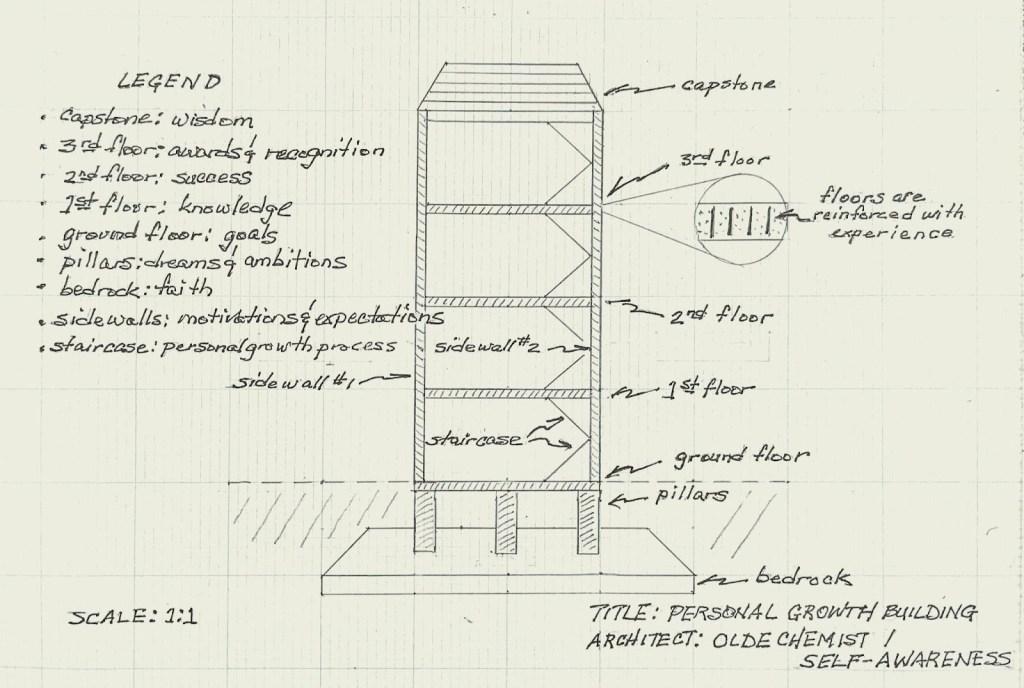
    Personal growth is a journey. It’s about learning who you are, understanding what’s important to you, and how you change/evolve as a person over time. It’s about striving to become the best version of yourself. While personal growth is a very complex topic, for the sake of this discussion, we will break it down into two major categories: inner growth (dreams, aspirations, goals) and outer growth (acquiring knowledge, learning skills, developing personal relationships). 

    The best way that I can describe it, is to imagine personal growth as a house (see figure above). Inner growth consists of the foundation of the house and the supporting walls, while outer growth represents what’s called the capstone, the roof of the building. The stability of this metaphorical building, what we can achieve (outer growth), depends on the strength our inner growth providing with its foundation and support.


    What is Inner Growth?

    Inner growth is strictly about you, and everyone’s journey looks different. Don’t get caught up comparing yourself to others, since everyone’s got their own way of doing things. Inner growth is not simply about grades, awards, or recognition. Instead, put your focus on learning about yourself and developing your own, individual strength of character, seeking inner peace and feeling good about who you are as a person.

    Inner growth is getting better at understanding your emotions, handling tough times, and knowing yourself really well. You’ve got to take the time to figure out your thoughts, feelings, what you’re good at, where you’re not so good, and what drives you. By taking the time recognizing these things, you can pinpoint what’s really important to you, learning to deal with times when you’re stressed, and getting better at shaking off disappointments. At the end of the day, this inner work builds your confidence and gives you a real sense of direction, which sets you up for personal success.


    The 3 Layers of the Inner Growth Foundation

    Dreams

    Dreams, the base layer of our personal growth “foundation”, are fueled by our imagination,  constantly pushing us toward a future that that we believe is better than our current situation. They encompass our hopes and desires, motivating us to strive for ambitious goals. Our dreams focus on emotional fulfillment, what will make us feel “good” or an ideal outcome rather than how practical it is to achieve it. Our dreams evolve as we age, shaped by our experiences and perspectives. As children, we might dream of material possessions like toys; as we grow older, our dreams may shift towards education, career, and personal achievements – we may desire a dream job for example. In our later years, our dreams may center around retirement plans and leisure activities. Regardless of our age, dreams remain a driving force, moving us forward and inspiring us to reach our full potential.

    Aspirations

    Aspirations serve as a bridge between our dreams and real life. They are more practical than dreams because they are grounded in reality, taking into account our talents and abilities, our available resources, and the limits of our situation. While your dreams may often feel distant and unattainable, aspirations are achievable within a specific, realistic timeframe.

    Aspirations involve breaking down our grand visions and dreams into smaller, more manageable tasks and goals, providing a clear, more manageable path toward our desired outcomes.

    Similar to dreams, aspirations are not set in stone; they are flexible and adaptable. As we age, our abilities and skills progress and circumstances change, our aspirations can be adjusted and redirected to achieve our evolving goals and priorities. However, unlike dreams, which can sometimes be vague and undefined, aspirations focus on specific objectives, providing us with a sense of direction and purpose.

    The process of setting and pursuing aspirations involves self-reflection and self-awareness. It requires us to assess our strengths and weaknesses, identify our values and passions, and understand our limitations. By setting realistic and achievable aspirations, we can create a sense of motivation and momentum, propelling us forward on our journey toward personal and professional success.

    Goals

    Essentially, goals act like a guide to achieving what you want. They turn big dreams and aspirations into things you can actually work on. By creating specific goals, you get clear steps and ways to see how you’re doing. This not only helps you reach your targets but also keeps you excited and on track.

    “How do you eat an elephant? One bite at a time.”

    African Proverb

    Once you have established a particular goal, the next step is to break down the process of achieving that goal into actionable steps or tasks. This is how we actually get things done. They’re the plan we use to turn our goals into reality.

    These steps tell us what to do and help us see how far we’ve come. Each completed step feels like a win and keeps us going. Plus, we can change things up as we go, adapting to whatever happens.

    Adding these steps to our goals means we’re not just dreaming, we’re doing. We feel more in control and less overwhelmed. Basically, actionable steps are what pushes us to succeed, turning ideas into real results.


    The Columns: Motivations and Expectations

    Motivations

    The reasons we take on any task are our motivations. They represent the underlying “why” that propels us towards our desired outcomes. Our motivations can be broken down into two categories: intrinsic, coming from from internal factors like a need to feel good about ourselves or our natural curiosity, or extrinsic, arising from external factors like our financial needs, a search for personal recognition or rewards, or social pressure. In many cases, our motivations are a blend of both. For instance, your decision to attend graduate school and pursue a master degree could be motivated by your desire for personal growth or a passion for learning (intrinsic), or the requirements of your career path, better job options, and higher earnings (extrinsic). Or perhaps a combination of both.

    Understanding our motivations requires us to recognize the importance and the need to practice self-awareness. Self-awareness involves honestly asking ourselves what is it that truly drives us, what rewards we seek, and whether our motivations coincide with what type of person we want to be known as. It is an ongoing process, as our motivations can evolve and shift depending on our circumstances. It is crucial for us to regularly evaluate our motivations in light of our aspirations and goals, ensuring that they remain aligned and supportive of our chosen path and overall personal well-being.

    By cultivating self-awareness and understanding our motivations, we can make more informed decisions, set meaningful goals, and live a more purposeful and fulfilling life. Remember, true motivation comes from within us, and it is our internal drive that ultimately propels us towards our greatest potential.

    Expectations

    Expectations also play a pivotal role in shaping our lives, influencing our decisions, actions, and overall well-being. Like our motivations, our expectations can be broadly classified into two main categories: external and internal.

    Both internal and external expectations play a significant role in shaping our self-worth and self-esteem. When we meet or exceed these expectations, we experience a sense of accomplishment and pride. However, when we fall short, we may feel disappointed, ashamed, or inadequate. It is essential to remember that our worth is not dependent on meeting all expectations, whether they are extrinsic, someone else’s expectations for us (such as those from parents, teachers, or friends) or intrinsic, expectations we impose on ourselves. We are all works in progress, and setbacks and failures are an inevitable part of our journey of personal growth. By practicing self-acceptance – understanding we are not perfect, being patient and compassionate with ourselves, and focusing on our internal motivations, we can develop a sense of self-worth that is not easily swayed by trying to please others or non-realistic expectations we may hold for ourselves.

    Personal Commentary

    Let’s be honest, most of us, myself included, have at some point in our lives created unrealistic expectations about how quickly we should be able to accomplish something – studying for an exam, getting a promotion, completing a training course. Perhaps it’s “I expect to be paid ‘x’ number of dollars for working as a (fill in the blank) because they’re lucky to have me.” Or, “I shouldn’t have to start at the bottom and work my way up, because they’re lucky to have me.”

    Growing up I put all my effort into meeting the expectation of others, especially my parents, while neglecting the other supporting components of the personal growth building . My dream to attend medical school and become a doctor was totally based on my parents expectations. I never had anyone talk with me about aspirations or how to set and act on goals. My motivations were entirely external, again meeting my parents expectations. Everything I accomplished – science fair awards, winning speech contest entries, and my Eagle Scout award was to please my parents.And it all came crashing down for me when I left home for college.

    The first semester of my freshman year at college I had two science courses, PS 11, Introduction to Physics with a Lab and Organic 1. Due to my sheer arrogance, being extremely overconfident in my knowledge of the subjects, my lack of study skills and having never written a research paper in my life, I received a “D” in both classes. My accumulative grade point average for the semester was a 2.0. All my dreams of attending medical school, meeting my parent’s expectations were flushed down the proverbial toilet. My sense of self worth, again based on pleasing my parents, was severely shaken. I lost all my self-confidence and considered not going back to college for the winter semester.

    Now I’m not saying that trying to meet your parent’s expectations is a bad thing, but it should only be part of your makeup, everything needs to be in balance, I should have developed internal motivations, understanding what truly made me happy, recognizing where my passions truly were and acting on them. Building on those passions a sense of self-worth that could not be shaken even when faced with adversity.


    The Roof: Outer Growth

    Think of the roof of your personal growth building,outer growth, like the tip of an iceberg, with all your hard work hidden beneath the surface. It’s the payoff for all the time you’ve spent learning, practicing self-awareness, sharpening your skills, and solidifying your beliefs. Every win, whether it’s success in the classroom, your college or graduate degree, a job promotion, your contributions to a community project, or taking care of yourself by forming a healthy habits, is clear proof of the significant inner growth happening.

    Plus, the positive impact you make goes beyond your personal wins, creating a ripple effect on those around you, your classmates, your coworkers, and the broader community. This could be through mentoring fellow classmates, your leadership in the classroom, in athletics, or your workplace, by giving back to others less fortunate than you, or just inspiring others with how you live. The consistent behaviors you adopt, like discipline, resilience, empathy, compassion, and integrity, become deep-seated habits that naturally lead to better outcomes. These aren’t temporary, transient, efforts your part; you’re building lasting qualities that fuel your ongoing growth.

    Ultimately, outward growth is a dynamic and continuous journey, changing as your inner self grows and deepens. It proves the power of aligning your self-awareness and personal beliefs with your actions, showing that true satisfaction, lifetime achievements, and meaningful impact on those around you naturally follow from a strong inner growth foundation.