Musings of an Old Chemist

A Chemist's Perspective on the Habits and Skills STEM Students Need For Success

Tag: personal growth

  • Overcoming Procrastination: Unlocking Your Activation Energy

    Overcoming Procrastination: Unlocking Your Activation Energy

    Have you ever sat down to study for an exam, write a difficult paper or report, or tackle a massive project, only to feel completely exhausted before you even begin? Staring at a blank screen or a pile of notes on a cluttered desk can feel like a heavy physical weight. You might interpret that feeling as a sign of weakness, that the task is impossibly hard, or that you simply lack the drive or ability to complete the task successfully. In our campfire example, you are facing a fundamental chemistry concept known as activation energy, the energy needed to initiate a reaction or process.

    The “Spark” That Initiates a Reaction

    Before a fire can burn, or a chemical reaction can release its energy, it requires an initial spark. You can build a perfect campfire with its dry wood, tinder, and plenty of oxygen, but it will sit there forever doing nothing until you strike the first match. That “spark” provides the activation energy: the absolute minimum amount of energy required to disrupt the state of the current situation and get things moving. In chemistry, this is often described as a steep energy “hill” that molecules must climb before they can react. Once they cross the crest of that hill, they roll down the other side, colliding and generating a reaction. Imagine trying to dissolve sugar in a glass of iced tea. You have to add energy by stirring in order to start breaking the chemical bonds in the sugar molecule to initiate the “dissolving” process.

    The Procrastination Barrier

    This physical law perfectly describes why we procrastinate, why we stay stuck in a nonrewarding job, and why we resist building new habits. The hardest part of any challenge, whether it is changing jobs or career paths, repairing a strained relationship, or sitting down to solve a complex problem, is almost always overcoming that initial act of procrastination. That mental resistance you feel isn’t a lack of ability. It is just the activation energy barrier. The barrier doesn’t mean the task is impossible; it just means the very beginning requires a concentrated, intentional burst of your energy.

    Once you push your effort over that initial hill, the process begins to generate its own momentum. Just like a campfire catching a log on fire, your effort becomes an exothermic (heat-releasing), self-sustaining reaction. Suddenly, the steps to complete a project become clearer, the words for a report or, in my case, a manuscript, start flowing, and the work doesn’t feel so overwhelming anymore.

    Overcoming the Initial Energy Barrier

    To be successful, in the classroom, the boardroom, or at home, you have to learn how to find and manage your activation energy. Here are four steps you can try to help you overcome your initial resistance to starting the task at hand.

    1. Identify the Energy Barrier
      1. The Boulder on the Hill Analogy: In chemistry, activation energy is like pushing a heavy boulder up a hill before it can roll down the other side on its own. What is a “boulder” you are currently avoiding pushing? Write down exactly what the top of the hill looks like (the moment the task finally gets easier).
      2. Name Your Resistance: What is squelching your activation energy? Fear of failure, perfectionism, or simply feeling overwhelmed by the sheer size of a project? Identify your biggest obstacle and describe how it actually feels when you stare at that untouched task.
    2. Reduce the Energy Barrier
      1. Chopping the Wood: When building a campfire, you cannot light a massive log with a single paper match; you have to chop it into kindling first. Take one intimidating project currently on your plate and break it down into manageable steps. What are the three smallest steps you can take today?
      2. Be Your Own Catalyst: In the lab, a catalyst is a substance that lowers the activation energy needed for a reaction to happen. Who or what is a catalyst for your situation? This may be moving to a quiet place, free of distractions, to study or work; blocking off time on your calendar; setting aside one time block a day to focus on the task at hand; or teaming up with a friend, coworker, or study partner who will hold you accountable. Which catalyst will you employ this week?
    3. Generate the Spark
      1. The 5-Minute Rule: The act of striking a match only lasts a second. Commit to doing your most dreaded task for exactly 5 minutes, just enough to create a “spark.” Give yourself permission to stop after 5 minutes if you want. Notice how you feel after those 5 minutes are up. Did a “fire” catch? Did you gain a new perspective on your ability to complete the task successfully?
      2. Striking the Match: We often wait around for inspiration to strike, but in reality, action creates the spark. What is one small, physical action you can take right now to create friction and start your momentum? For me, it’s setting my alarm on my phone to get up one hour earlier each morning, then setting a one-hour timer on my computer screen, focusing all my efforts on writing for that amount of time with no distractions.
    4. Recognize the Reaction (Exothermic Growth)
      1. The Heat Release: Once a campfire catches, it gives off warmth and light. Think of a time you finally started a difficult task and felt that wave of relief when you discovered it was not as difficult as you initially thought and you could accomplish it. Describe that feeling. How can remembering that satisfaction help you start the ball rolling the next time you face a tough task?

    Final Thoughts

    It is important that we understand activation energy and how the concept applies in our process of personal growth. So very often we let our emotions, the fear and self-doubt, affect how we approach our day-to-day living. Because we have either too little self-confidence or, in some cases, too much self-confidence, we procrastinate, either never attempting to complete an assigned task or, worse, because we’re overconfident, never giving the task our best effort, assuming we only need to do just good enough and feel that is all the effort required for the best result. Knowing ourselves (self-awareness) is key to making positive change in our lives and how we address new challenges.

  • Personal Growth: The Campfire Analogy Explained

    Personal Growth: The Campfire Analogy Explained

    I associate the process of personal growth with building a campfire when I go camping. To begin to understand this personal growth/campfire analogy, it’s helpful to examine the basic steps and components of a campfire, which, by definition, is a combustion reaction. 

    The general formula for the combustion reaction process is:

    Reactants + Catalyst + Activation Energy ⇒ ReactionMechanism ⇒ Products + Byproducts

    Whether it is in a fireplace, a backyard fire pit, or a campfire, the combustion process is in its simplest form:

    Fuel + Heat (Spark) + Oxygen ⇒ (Reaction mechanism or process) ⇒ Light + Heat + CO2 

    Why Use a Campfire as an Analogy For Personal Growth?

    Here are five reasons why a campfire is such a powerful analogy for personal growth:

    1. Building a Campfire Requires Effort on Our Part 

    A campfire doesn’t happen by accident, and neither does personal growth. You can’t just throw a match at a pile of logs and expect it to burn. You have to collect the right materials and stack them together in the right order: tinder (paper, dry grass, and pine needles) to catch the spark, kindling (small twigs and branches) to build the heat, and larger logs to sustain it. Likewise, we can’t tackle the most complex challenges in our lives, whether it’s in the classroom, workplace, or at home, without first identifying and mastering the small, fundamental skills and gradually building on them.

    2. The Essential  “Spark”

    Even if you’ve built the perfect campfire, nothing happens without a spark or flame to ignite the fire. In personal growth, that spark is initiative, which ends with you taking action. It might come from within, something that piques your curiosity or a sudden desire to improve. Or, it may come from outside, such as encouragement from a teacher, parent, or mentor. Regardless of the source of the “spark”, your effort and energy must be applied to ignite the personal growth process.

    3. Room to Breathe

    Early on, one of the most common mistakes I made when building a campfire was rushing the process,  packing the firewood too tightly, too close together. If the fire doesn’t have enough space for airflow (oxygen) it needs, it gets smothered and dies. The same is true for learning and our development. If we feel overwhelmed, feel too much pressure to perform and meet high expectations, and are not given the “space” to make mistakes and process new information, we may lose our motivation to try. Personal growth requires breathing room.

    4. It’s a Transformation Process

    A campfire is a series of energy transformations. It takes raw materials (tinder, kindling, and logs) and turns them into heat and light that can warm a campsite and brighten the dark. Personal growth does the same thing. It takes our energy and efforts, our life’s lessons (both good and bad), time and experience, transforming them into new abilities, wisdom, and character traits that ultimately benefit us and the people around us.

    5. Campfires Demand Constant Attention

    A fire is never “finished” until it’s out. If you walk away from it, it will eventually burn through its fuel and fade into ashes. It requires someone to keep an eye on it, adding tinder, kindling, and logs whenever needed. Likewise, personal growth is a lifelong process; there is no point at which you can simply choose to stop learning and expect to remain as “sharp” mentally and emotionally.

    The Significance of Heat and Light

    Light: Clarity, Understanding, and Guidance

    Where the light of the campfire helps penetrate the darkness, light in our personal growth analogy represents our mental and emotional clarity and our understanding of who we are as a person. Clarity and understanding come in two forms: internal and external.

    • Internal: It is that “lightbulb” moment when a confusing problem, work assignment, or situation suddenly makes sense. When we struggle, regardless of the situation,  we are figuratively in the dark. As we grow, practice, and learn, we generate our own “light”—the ability to see solutions to our problems, and we begin to understand the world around us more clearly.
    • External: Our metaphorical light is visible to others from a distance. As we grow in character and knowledge, our “light” serves as an example for others. We become a leader, a teacher, a guide for our friends, coworkers, and family members, showing what is possible through hard work and dedication.

    Heat: Passion, Action, and Empathy

    Heat is energy you can feel. It provides warmth against the cold and the energy needed to do work. In personal growth, heat represents our passion, actions, and the impact we have on others. Like light, heat exists in two forms: internal and external.

    • Internal: Heat is the internal drive and passion that keeps us moving forward. It’s the energy and motivation to tackle the next challenge, study for the next test, complete the next project, or try again after failing. It is the active desire to improve.
    • External: Heat from a campfire radiates outward, warming the area. A well-tended fire warms everyone gathered around the campsite. Similarly, as we grow in character and wisdom, we radiate a “warmth” that impacts our community. This looks like empathy, kindness, and the willingness to help someone who is struggling.

    Final Thoughts: The Perfect Balance

    A fire that produces only light without heat is like a lightbulb; you can see the area around it, but it won’t keep you warm in the cold or roast your marshmallow for s’mores. A fire that produces heat but no light is hidden from sight; it emits heat energy, but you still can’t see where you are going.

    True personal growth yields both. We don’t just gain the “light” from our knowledge and experience; we also develop the “heat” of good character traits (compassion, empathy, humility, perseverance, and resilience), passion, and a desire to be a positive influence on everyone around us.

  • The Danger of Believing Your Own “Press”

    The Danger of Believing Your Own “Press”

    Long before I had fancy titles or stood in front of rooms as the resident “expert,” I was just an instrumental chemist. I loved the hands-on part of the work: preparing standard solutions, mixing reagents, operating instrumentation, and dealing with complex issues and unexpected results. I had the freedom to experiment and make mistakes as I figured things out. But over time, my success shifted my way of thinking. As the applause grew louder, I received more recognition, expectations increased, and without even realizing it, I traded my passion and curiosity for experimenting in the lab for the heavy burden of feeling like I had to be the expert; I had to know it all.

    Upon reflection, I put on the mask of knowing everything just so people would see me as the authority, and I let that boost my ego. I’m blessed to have a mind that picks up concepts and solves problems quickly, but that sense of confidence turned into arrogance. I stopped asking for help and stopped looking to others for advice or feedback.

    Take building a campfire, for instance. I’m an Eagle Scout, but that doesn’t mean I automatically knew everything about starting a fire. Back then, though, people automatically expected me to be the expert because of my Eagle Scout award, so I was obsessed with building the absolute “perfect” campfire. To meet everyone’s expectations, I needed to show off my skills and prove I could do it completely on my own, even in a pouring rainstorm, without needing anyone’s help or advice.

    The same thing happened in real life. I was trying so hard to prove I had all the answers that I shut out the help from other people that I actually needed. I was so caught up in putting on a show that I ended up forgetting the passion, the curiosity that kept me going in the first place.

    For example, when we try something new just to see what happens, we’re exploring, like a scientist using the Scientific Method. But when we only do things to show off what we already know, we’re just putting on an act. And acting all the time is exhausting. It takes all the fun out of what you’re doing because you care more about what everyone else thinks than about taking the time to enjoy the process. Now that I am older, I’ve realized I didn’t need an audience. Now I would trade everything to get back to doing what I loved, just being an instrumental chemist, working in a lab again. All the titles and recognition do not necessarily equate to true happiness in life. Sometimes it’s best to go back where you started, where your true passion lies.

  • Ignite Your Growth: The Fire Triangle of Learning

    Ignite Your Growth: The Fire Triangle of Learning

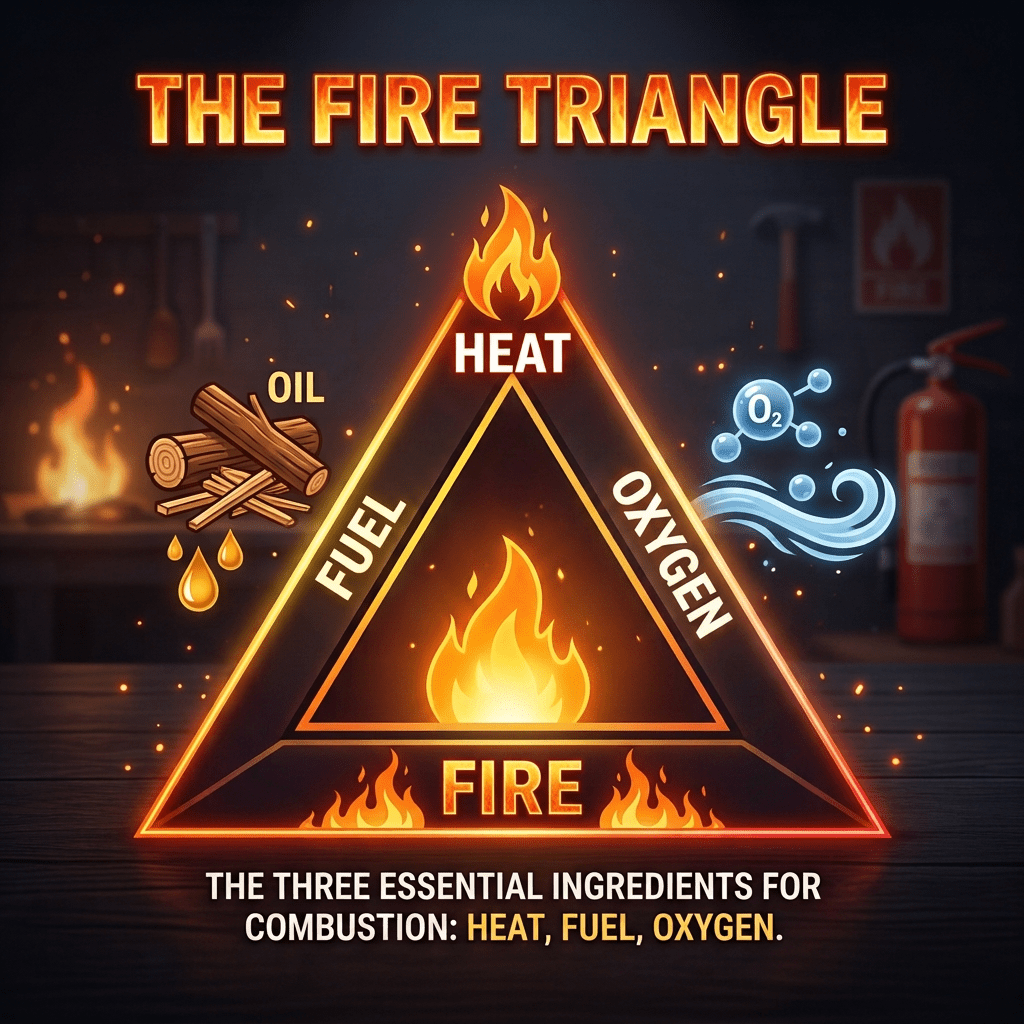
    Think about a campfire. To keep it going, you need three simple things: heat, oxygen, and fuel. Scientists call this the “fire triangle.” If you take even one of those away, the fire goes out, and you’re left with cold ash.

    Our minds work the same way. Whether you’re a student trying to learn something new or a parent helping them out, staying curious and excited about growth follows this same rhythm. To keep your “inner fire” burning, you have to know how to feed it, give it air, and light the match.

    Real change doesn’t just happen by accident. Just like a real fire, your personal growth depends on three main parts: Heat (the spark to start), Oxygen (your curiosity), and Fuel (what you’re learning)

    How to Get Things Moving

    To keep your momentum going, you need to let energy flow through four different types of fuel:

    Spark (Your Choice) → Tinder (Tiny Actions) →  Kindling (Your Routine) →  Logs (Big Goals)  →  Coals (Your “Why”)


    The Spark

    The Spark is just your decision; it’s your commitment. It’s that moment where you say, “Okay, I’m going to do this.”It’s tiny, but without it, the tinder (like opening a book, putting on your shoes, or in my case, writing the first outline) never catches fire. If you miss it, you can have the best plans and the best books, but without that one decision to strike the match, nothing happens. The decision to sit down right now and strike the match exclusively onto tinder. You don’t decide to “finish that report or project today”; you simply need to decide to take the first step and type one sentence.


    Heat: The Energy of Wonder

    Fuel just sits there unless something starts the reaction. In life, curiosity is what provides that heat. It’s asking, “What if?” or “How does this work?” That bit of wonder turns your potential into action.

    You can have the perfect amount of tinder, kindling, and hardwood and a gentle breeze providing the flow of oxygen, but nothing happens until you introduce heat. In science, that heat is the “activation energy” needed to get things started. For us, that heat is excitement and purpose. It’s that jolt you feel when you see a problem or a new skill and think, “I want to figure this out.” Allowing us to transition from being a passive observer to an active participant. Heat enables you to fully engage in the process.


    Oxygen: Fresh Ideas and Perspectives

    A fire can’t breathe in a closed container. Without fresh air, the flames just turn into smoke and go out.

    In our minds, oxygen is asking questions and listening. It’s easy to stick to what we already know, but a growing mind needs a “draft.” It needs us to listen to different ideas and welcome a good discussion. When we open up to new thoughts, we give our curiosity room to breathe.

    To keep the fire bright, try treating life like a science experiment. Try using the Scientific Method. That’s your oxygen. It just means trying something new, watching what happens, and thinking about the results. When you look at things this way, a “mistake” isn’t a failure—it’s just a clue. Adjusting your plan gives the fire a fresh breath of air.

    When you’re curious (oxygen is in excess), you do your work because you actually want to find a solution to a problem or just to see what happens. The question you ask yourself is: “What can I learn here that I didn’t know before?”

    When you’re just going through the motions, you’re just doing work to look smart or get it over with. When you’re just putting on an act, your efforts feel like a chore, and instead of a flame (heat),  you get just a pile of sticks.


    Fuel

    In our “campfire” model, your fuel is your love of learning. It’s your energy and beliefs just waiting to be tapped. Every fire needs something to burn. In your life, fuel is everything you’re taking in: books, hobbies, and even just observing the world around you.

    Learning doesn’t end when you leave the classroom. If you stop reading new things or trying new skills, you starve your “fire. To keep it going, you have to feed your mind with interesting stories, science, art, and new ideas every day.

    The Different Types of Fuel

    To keep your fire from going out, you can’t just throw everything in at once. Fire needs a specific order to work right. For example: If you throw a huge log on a tiny match, you’ll just squash the flame. If you only burn dry leaves, you’ll be striking matches all day without getting warm. To build a life that stays bright, you need to understand the four layers of your fuel pile.

    Tinder: Getting Started

    Tinder isn’t meant to last a long time. In our personal growth “campfire”, tinder is tiny, “No-Brainer” actions. Its only job is to get you off the couch and past that “I don’t want to do this” feeling.

    Since tinder is so easy to light, it doesn’t take much willpower. It’s just saying, “I’ll write one sentence,” or “I’ll just open my book.” Don’t try to plan your whole future with tinder; just use it to get things moving. For me, it’s opening this manuscript, reading the last sentence I wrote yesterday, or adding three bullet points to a chapter outline.

    Kindling: Building a Routine

    Once your tinder is lit, you need kindling. For students, this is your study habits; for the rest of us, this is our daily routines, the 30 to 90 minutes we spend actually focused on what we need to accomplish.

    Kindling turns that quick spark into real heat. Without a routine, our small decision to start an effort (tinder) just burns out.  Kindling keeps the flame alive until the big log catches. One session won’t finish a big project, but ten sessions in a row will. For me, it represents getting up early and spending 45 minutes writing, three days a week

    Hardwood Logs: Major Goals

    Logs are your major life goals, like graduating, writing a book, or mastering a hard skill. They contain a significant amount of energy but need a lot of heat to get started. They can give you personal success and satisfaction for a long time, but you can’t light them with a single match. You don’t just “start” with a log. You use your tender (decision) and kindling (habits) to build up enough heat until the log finally ignites. Once it does, it becomes a steady source of energy. You can’t just wish a big goal into existence. If you only focus on the massive finish line, you’ll just feel stuck. You have to work your way up. In my case, my hardwood “log” is a published, 60,000-word completed manuscript draft.

    The last consideration is one we do not often recognize to be part of our “campfire scenario, but is an absolute necessity for a successful, vibrant campfire: the bed of coals that exists under the burning fuel.

    The Bed of Coals: The “Why”

    Under the logs is the most important part of our personal growth campfire: the glowing coals. This is our core “Why”, the real reason we care about what we’re doing. This isn’t about grades or awards. It’s about your true desire to learn, to grow, and to help others along the way. When life gets hard, and the flames flicker, your “coals” stay hot. They keep your spirit alive so you don’t just give up, making

     it much easier to start the process again tomorrow. As long as your reasons are well grounded, you can always keep going.


    What Can Go Wrong

    1. No Oxygen (Just Going Through The Motions)

    Sometimes people just go through the motions. They aren’t curious anymore, and our life’s work starts to feel like a chore. That’s what happens when you cut off the oxygen. When you work without curiosity, it’s like closing the vent on a fireplace. You’re trying to burn wood, but you aren’t letting it breathe. Without air, you don’t get a nice warm fire. You just get a lot of smoke and feel drained. Working just because you “have to” feels like a waste of time. It leads to you feeling grumpy, bored, and tired of it all. You have to use raw willpower to get anything done. It’s exhausting, and you’re likely to give up once you get tired.

    1. Dying Coals (Burnout)

    Coals are what keep the heat steady. If you let your coals die and just try to keep a fire going with paper and twigs, you’re going to get burned out. This is like hustling really hard without a real reason. Without them, the fire goes out as soon as you stop feeding it. Working hard without a dream to support you takes a ton of effort. You get quick bursts of energy, but the moment you stop, you’re back to zero. Without your  “Why” (the coals), trying to stay motivated is exhausting. 

    1. Smothering the Fire (Feeling Stuck)

    Big logs need lots of heat to catch. You need tinder and kindling to build up the heat first.

    If you drop a huge log on a tiny match, it goes out instantly. This is like having big dreams without small habits to get you there. If you only think about the huge goal, you’ll feel overwhelmed. The goal is just too big to handle all at once, and you don’t know where to start. You don’t start with the log; you start with tinder. Trying to do too much at once just leads to feeling stressed and stuck.

    Troubleshooting the Problem

    If you feel stuck: Your goal is too big. Try starting with some tinder (tiny steps).

    If you’re busy but not getting anywhere: You’re burning through tinder but forgetting your kindling (habits and daily routines).

    If you feel burned out: You’re letting your coals die. Remember why you started in the first place.

    Final Thoughts

    You don’t finish a big project overnight. You do it by starting small, keeping a good routine, staying curious, and remembering why it matters.

    Staying curious is a skill you keep practicing, like tending a fire. By making sure your mind has plenty to burn, fresh air to breathe, and that spark of wonder, you can keep learning and growing your whole life. A well-tended mind doesn’t just help you—it shares its warmth with everyone around you.

    When curiosity, passion, and a little trial-and-error come together, they create something great. Your excitement starts the fire, your habits keep it going, and your curiosity keeps the air flowing, turning your hard work into real, lasting growth.


  • Faith and the Serenity Prayer

    Faith and the Serenity Prayer

    “God, grant me the serenity to accept the things I cannot change,

    courage to change the things I can,

    and wisdom to know the difference.”

    The Serenity Prayer requires that we distinguish between the variables we have the power to change and circumstances we must accept.

    The heart of this prayer is the third line: wisdom. When we look through the lens of faith, figuring out what to change and what to let go of isn’t just a mental challenge; it’s an exercise based in humility, trust, and our perception of the world around us.

    What can we change? We all have control over our choices, how we react in situations, our moral character, how much effort we put out in our daily activities, and how we treat others. Faith gives us the courage to act when fear, comfort, or our downright reluctance to act tempts us to remain passive. It defines our actions not as an attempt to control our world, but as a responsibility to do good with the resources and energy we have.

    What things must we accept? First of all, we need to recognize that we are not in control of the universe and that there are limitations on what we can do. This means we must accept that we cannot control other people’s actions and reactions, we cannot change the past, and that there will always be loss in our lives, from the death of our parents, broken relationships, losing jobs, to our dreams of success. Faith allows us to recognize that our human limitations offer relief rather than defeat. Through faith, acceptance of those things we cannot change is not a negative action; it is an act of surrender and trust. It means we release our illusion of control to a higher authority, allowing us to stop burning energy trying to rewrite history or force other people to change.

    Conclusion

    Understanding what to change and what to accept isn’t a problem to solve once and set aside – it is a daily, living practice. Some days will require the courage to step up, speak out, and make a difference. Other days will ask for the quiet, solemn strength to release what was never ours to carry in the first place.

    You don’t need to have every possible outcome of every decision you make planned out, nor do you need total control over tomorrow to live well today. Every time you face adversity, pause, take a breath, and choose wisdom over panic. Focus simply on the single step right in front of you. Trust that your honest effort is enough where you can act, and trust that you can let go where you cannot. 

    Shifting our trust to God changes everything. It allows us to say: “I will do my best with the gifts and opportunities I’ve been given, but the final outcome is in Your hands.” This turns the Serenity Prayer into a source of peace. It lets us breathe again, knowing that while we are responsible for our actions, God is in control of the results.

  • Mastering Study Habits: 3 Steps to Improve Grades

    Mastering Study Habits: 3 Steps to Improve Grades

    Do you feel like you’re putting in your maximum effort, spending an extraordinary amount of time studying, yet your grades on exams don’t reflect your efforts? It’s a common frustration, but the issue often isn’t your effort – it’s your strategy. To succeed in tough subjects like math and science, you need to control the parameters that truly impact your learning. This post outlines a simple, three-step system for better study habits: start with the environment where you study, then perfect your note-taking technique, and finally apply a consistent daily review to retain information in your long-term memory.


    Step One

    When I’m tutoring a student who is struggling in math or science, the first thing I discuss – with both the student and their parents – isn’t usually the actual schoolwork. Instead, it’s about a simple idea: how well you study totally depends on where you’re doing it.

    A lot of students think “studying” just means having their textbook open. But if they’re sitting in their bedroom, surrounded by video games, the TV, music, and their bed, they’re basically inviting distractions. The bedroom isn’t a focused setting; it’s set up for relaxing, not for the serious mental effort it takes to really learn difficult material.


    Personal Commentary

    Students like to study together, and while I enthusiastically endorse study groups, I find they work best in a controlled, supervised environment such as a library or at a kitchen table with the assistance of a parent or a qualified tutor.


    Compare it to a science experiment. The first step to a successful one is controlling all the components. In the same way, you can’t truly figure out if you understand a subject if your attention keeps getting broken by your surroundings.

    The quickest and most effective way to see better grades is to move to a spot with fewer distractions. Places like the dining room table or a kitchen island are neutral, structured areas. That physical move actually signals to your brain that it’s time to focus on work. This change lets you pay critical attention and concentrate for genuine understanding.


    Step Two

    After you’ve got your study space all set up, the next big thing for effective studying is how you actually write things down, your note-taking technique. Similarly, like a science project, you need clear, neat data collection so you can actually look at it later.

    Many students make the mistake of trying to write down everything the teacher says. However, just being a human tape recorder doesn’t mean you’re learning anything. Good note-taking needs to be an active, organized process.

    Using a structured layout, especially for math and science, is a major upgrade. One very successful method is to split your paper into separate columns, one for your main notes. Leaving one for when you are reviewing your notes, for key formulas, questions, or reminders, and for a summary – you force your brain to figure out and organize the concepts or formulas as they’re taught, instead of just mindlessly copying them.

    Taking notes is the second step in this process, but the real goal is actually to retain the information long-term. That’s exactly why you have to develop the habit of reviewing them every single day.


    Step Three

    Human memory is imperfect. If you write notes on Monday and then don’t look at them again until right before a Friday test, you’re going to lose a great deal of that information. At that point, you’re not actually reviewing – you’re basically starting over and relearning everything.

    To beat this whole “forgetting curve” thing, you need to use those great notes in a smart way. I once read an article recommending that for every hour you spend in the classroom, you devote two hours at home completing the assigned homework and reviewing/studying the notes from that day’s lesson. When you start, hit the main points and use your notes to quiz yourself. This small, consistent effort stops the forgetting process dead in its tracks. It’s the secret for locking complex ideas into your long-term memory, turning studying from a frantic, last-minute panic session into a calm, steady climb to mastery.


    Personal Commentary

    I had a student in an advanced math and science program, in which I taught, who, when reviewing her notes at home, spent time highlighting the key, crucial facts she needed to commit to memory. Her notes then became a major learning tool in her success in the classroom.


    Conclusion

    In summary, becoming less frustrated about your academic success isn’t solely about working harder – it’s about controlling the right variables. If you commit to this simple, three-step system, you can fundamentally change the way you learn. Start by mastering your environment to eliminate distractions and signal your brain it’s time to focus. Next, upgrade your note-taking technique from passive copying to active organization. Finally, defeat the “forgetting curve” by implementing a small, consistent daily review. These three strategic habits combined are the secret to mastering complex ideas, turning your time investment into genuine, measurable success.


    This blog post’s development was supported by Gemini (an AI from Google). I used AI to structure complex technical arguments and to synthesize current educational trends as of 2026. Every piece of AI-generated material was reviewed against recent educational research and adjusted to incorporate my own perspective.


  • Weekly Quotation: Wednesday, March 4, 2026

    Weekly Quotation: Wednesday, March 4, 2026

    For your consideration:

    There are no great limits to growth because there are no limits of human intelligence, imagination, and wonder.

    – Ronald Reagan

  • Weekly Quotation: Wednesday, February 25, 2026

    Weekly Quotation: Wednesday, February 25, 2026

    For your consideration:

    Your present circumstances don’t determine where you can go; they merely determine where you start.

    – Nido Qubein

    Nido Qubein immigrated to the United States from Jordan in 1966. He arrived as a teenager with very little money and a limited grasp of English.

    In 2005, he became the President of High Point University, a small liberal arts college in High Point, North Carolina. Under Qubein’s leadership, HPU is now globally recognized as an extraordinary institution, earning three #1 rankings in U.S. News & World Report’s 2026 Best Colleges edition. He is renowned for emphasizing that students need more than just technical knowledge – they need “life skills”, such as communication skills, the ability to adapt to different situations, and a growth mindset.

  • Mastering Emotional Intelligence for Personal Growth

    Mastering Emotional Intelligence for Personal Growth

    When we talk about the subject of personal growth, we usually split things into two buckets: “Inner” growth (a growth mindset, self-awareness, and resilience) and “Outer” growth (relationships, communication skills, achievements, and recognition). However, here’s the missing piece in our model: Emotional Intelligence (EQ). Emotional Intelligence (EQ) is the bridge that unites these two separate ideas, preparing you to be successful as a functioning member of society, regardless of your chosen career path. Producing real-world success that people actually notice.

    Emotional Intelligence (EQ) isn’t just about being nice; it is the ability to understand and manage your own emotions while recognizing and acknowledging the feelings of others. If your IQ measures your intelligence or book knowledge, EQ measures your people skills and self-control. It is the connection between thinking and feeling.


    The Four Core Pillars of Emotional Intelligence (EQ)


    Pillar #1: Self-awareness

    In a previous blog post, we defined Self-Awareness as the GPS for our process of personal growth. And it is the absolute starting point for emotional intelligence (EQ). It’s all about understanding your own moods, feelings, what drives you, and how all that affects the people around you. To master this, you need to take an honest look at what you’re good at and what you struggle with, and feel genuinely confident in yourself. The key thing is, a self-aware person doesn’t just feel an emotion; they can actually figure out why they’re feeling frustrated, happy, or stressed. This deep internal check is the groundwork for everything else in emotional intelligence.


    Pillar #2: Self-control

    The second component, self-control (self-management), follows self-awareness. It is crucial for keeping destructive emotions and urges in check, so you can stay calm and collected, even when things get stressful. Think of it as emotional control—it’s that ability to hit the pause button between feeling an impulse and actually doing something about it. This pause allows you to make smart, principled decisions instead of just reacting impulsively or defensively. Self-management includes being flexible, taking initiative, and keeping a positive attitude in order to reach your goals, even when you face roadblocks.

    Common Examples:

    When receiving constructive criticism, someone with low emotional intelligence (EQ) might immediately become defensive, blame someone else for their mistake, or just give the person the silent treatment, which is not helpful. In contrast, a person with high emotional intelligence will pause, acknowledge that the criticism, while it may feel uncomfortable, is justified, and then ask what they need to do to improve, genuinely thanking the person for being honest. 

    When having a “bad day,” a person with low emotional intelligence stressed about a meeting or a deadline, might react by snapping at their parents, spouse, friend, or even someone in a restaurant or store, just because they are in the way. A highly emotionally intelligent response is to recognize the feeling of being overwhelmed and directly tell a partner, “I’m having a ridiculously stressful day and I’m a bit on edge. I need 20 minutes of quiet to de-stress so I don’t accidentally take it out on you.” 


    Pillar #3: Social Awareness

    Social Awareness (Empathy) is the third key ability, which is shifting your focus away from yourself and focusing on others. This crucial skill enables you to sense, understand, and respond well to the emotional needs and concerns of those around you. Often described as being able to “read the room”, it requires you to see things from someone else’s perspective and grasp the mood of the situation. It goes beyond just seeing that someone is upset; strong social awareness helps you to understand why they are feeling that way, which is critical for great relationships and connecting with others.

    For Example:

    During a big disagreement, either at home, school, or at work, a person with low emotional intelligence makes their goal to “win” the argument and prove the other person is wrong. Conversely, a highly emotionally intelligent individual focuses on understanding the other person’s perspective, asking questions like, “Help me out here – why is this so important to you?” because they value the relationship more than being right.


    Pillar #4: Building Relationships

    Building Relationships is the final stage of emotional intelligence. It’s where you combine your emotional intelligence and social skills to manage complicated social situations, inspiring others. This is the top level of emotional intelligence, showing how well you can influence people, get them on board, and help them grow. It covers multiple social and communication skills—things like building trust and connection, communicating your message clearly and powerfully, addressing disagreements without a fight, and promoting change in a variety of settings, at home, school, and work. Bottom line? Relationship Management is about taking what you know about yourself (self-awareness) and what you feel for others (empathy) and turning that into positive interactions with those around you.


    Conclusion

    Emotional intelligence (EQ) is an essential skill for genuine, lasting success. Without it, attempts at inner growth become mere wishful thinking that fails when the pressure mounts. And outer growth results in shallow relationships that lack the trust necessary for long-term progress and achievement. Emotional intelligence links your inner strength to your outer results, establishing a mechanism that accelerates both personal growth and professional success.

  • Mastering STEM: 3 Keys to Success Beyond ‘Natural Genius’

    Mastering STEM: 3 Keys to Success Beyond ‘Natural Genius’

    There’s a persistent myth in Science, Technology, Engineering, and Mathematics (STEM): that success belongs to the “natural genius,” the person who just “gets it.”

    Here’s the truth: Achieving mastery in challenging STEM fields has little to do with some magical, intrinsic gift. It is 100% based on the application of several advanced intellectual and behavioral strategies. Think of it as a complete operating system upgrade for your brain.

    To move beyond the daily struggles and achieve genuine mastery in STEM, you need to commit to these three non-negotiable principles.


    The Power of Modeling


    Social Learning Theory, pioneered by Albert Bandura, shows that a huge part of human learning happens through observing and imitating others. But success isn’t about emulation (or copying) a single skill; it’s about modeling a complete system.

    To succeed, you must actively observe and adopt the entire package of skills and habits from those who have already achieved high levels of success. For example:

    • Advanced Technical Skills: How do experts and mentors break down a complex problem? Learn their analytical approaches.
    • Powerful Work Ethic: Look at how they meticulously structure their study schedules, their uncompromising standards for quality, and their consistent effort.
    • Powerful, Positive Mindset: How do they view failure? It’s purely objective, instructive data—nothing more.

    Take action, stop focusing solely on the textbook content. Start noting the process of your most successful peers or mentors. How do they organize? When and how do they study? How do they handle a major setback? You want to copy and implement a system, not just learn content knowledge.


    Escaping the “Developmental Trap.”


    A massive barrier to our progress is what is called the “developmental trap.” This is when you inadvertently become rooted in ineffective behavioral patterns that feel comfortable but sabotage your future.

    Are you chronically procrastinating? Do you find fault in everything you do, seeing only the negative outcomes, which paralyzes you from even starting? Are you habitually unclear about your goals and intentions, or vague in your communication with your fellow students/teachers/professors? These are self-sabotaging habits.

    To break free, you must perform a conscious, honest self-assessment and start developing and exercising your self-awareness skills.

    Follow-up on your self-assessment by:

    • Installing these productive habits: Resilience (bouncing back from setbacks with renewed effort) and a rigorous work ethic (getting things done with uncompromising quality and efficiency).
    • Discard low-return behaviors: Self-incrimination, self-doubt, and negativity.

    Over time, your relentless effort will help create a powerful “internal compass.” Your motivation shifts from the temporary need for external validation (a good grade, a compliment) to an intrinsic drive—a non-negotiable, standard you’ve set for quality and thoroughness that you must meet, regardless of what anyone else thinks.


    Prioritize the Process Over the Score


    The final, and perhaps most crucial, mental adjustment is letting go of the destructive notion that you must achieve absolute, flaw-free perfection. That ideal is unattainable and will only lead to burnout.

    The successful STEM student must value the process of learning and discovery over the final numerical score or grade.

    When an experiment fails, a line of code breaks, or you get a subpar result on a quiz, how you react must change. Don’t view it as a “mess-up” or that you don’t have what it takes to “make it.” Instead, you must treat it as a starting point from which you learn and progress.

    This data is essential for:

    1. Precisely identifying your weaknesses.
    2. Fine-tuning your approach to solving the problem or issue.
    3. Educating you for the design of your future, a more refined attempt.

    This mental shift is life-changing. It moves your focus from avoiding mistakes (a fear-based approach) to maximizing learning effectiveness (a growth-based approach.)


    Summary


    In the demanding world of STEM, setbacks—from experimental failures to complex problem-solving roadblocks and challenging coursework—are a daily certainty. Therefore, the single most critical factor for your long-term success and ultimate perseverance is your ability to effectively manage and recalibrate your expectations.

    Really successful STEM students ditch the idea that they have to be absolutely perfect. They focus more on consistently putting in the hard work and sticking closely to the process (understanding the “why” and the “how”), instead of getting hung up on immediate, flawless results. This mindset change is a huge win: it means they stop seeing mistakes as a huge personal flaw and start seeing them as valuable, objective data—the stuff you need for real learning, figuring out new strategies, and improving down the line. In the end, this shift turns anxiety into a powerful tool for growth.