Musings of an Old Chemist

A Student’s Guide to Navigating Life, Career, and the Unknown

Tag: scientific method

  • Ignite Your Growth: The Fire Triangle of Learning

    Ignite Your Growth: The Fire Triangle of Learning

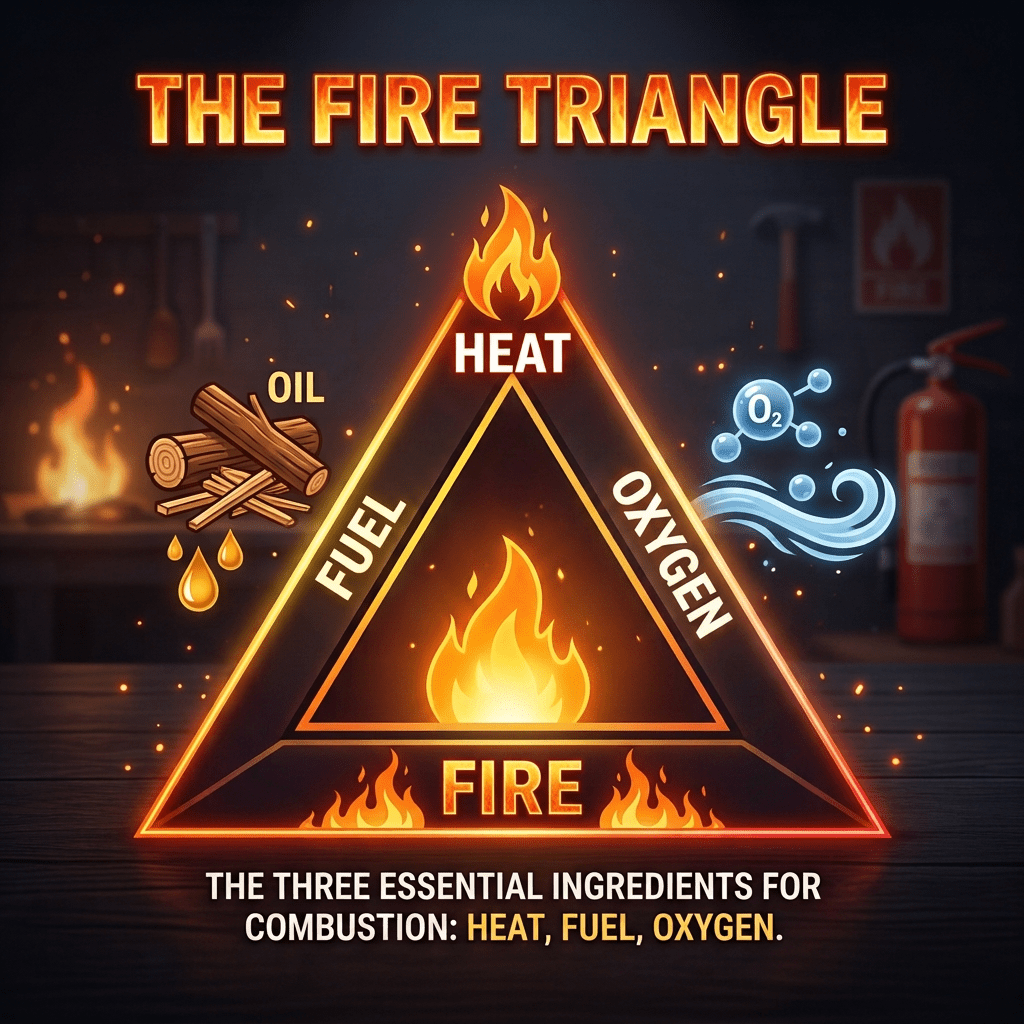
    Think about a campfire. To keep it going, you need three simple things: heat, oxygen, and fuel. Scientists call this the “fire triangle.” If you take even one of those away, the fire goes out, and you’re left with cold ash.

    Our minds work the same way. Whether you’re a student trying to learn something new or a parent helping them out, staying curious and excited about growth follows this same rhythm. To keep your “inner fire” burning, you have to know how to feed it, give it air, and light the match.

    Real change doesn’t just happen by accident. Just like a real fire, your personal growth depends on three main parts: Heat (the spark to start), Oxygen (your curiosity), and Fuel (what you’re learning)

    How to Get Things Moving

    To keep your momentum going, you need to let energy flow through four different types of fuel:

    Spark (Your Choice) → Tinder (Tiny Actions) →  Kindling (Your Routine) →  Logs (Big Goals)  →  Coals (Your “Why”)


    The Spark

    The Spark is just your decision; it’s your commitment. It’s that moment where you say, “Okay, I’m going to do this.”It’s tiny, but without it, the tinder (like opening a book, putting on your shoes, or in my case, writing the first outline) never catches fire. If you miss it, you can have the best plans and the best books, but without that one decision to strike the match, nothing happens. The decision to sit down right now and strike the match exclusively onto tinder. You don’t decide to “finish that report or project today”; you simply need to decide to take the first step and type one sentence.


    Heat: The Energy of Wonder

    Fuel just sits there unless something starts the reaction. In life, curiosity is what provides that heat. It’s asking, “What if?” or “How does this work?” That bit of wonder turns your potential into action.

    You can have the perfect amount of tinder, kindling, and hardwood and a gentle breeze providing the flow of oxygen, but nothing happens until you introduce heat. In science, that heat is the “activation energy” needed to get things started. For us, that heat is excitement and purpose. It’s that jolt you feel when you see a problem or a new skill and think, “I want to figure this out.” Allowing us to transition from being a passive observer to an active participant. Heat enables you to fully engage in the process.


    Oxygen: Fresh Ideas and Perspectives

    A fire can’t breathe in a closed container. Without fresh air, the flames just turn into smoke and go out.

    In our minds, oxygen is asking questions and listening. It’s easy to stick to what we already know, but a growing mind needs a “draft.” It needs us to listen to different ideas and welcome a good discussion. When we open up to new thoughts, we give our curiosity room to breathe.

    To keep the fire bright, try treating life like a science experiment. Try using the Scientific Method. That’s your oxygen. It just means trying something new, watching what happens, and thinking about the results. When you look at things this way, a “mistake” isn’t a failure—it’s just a clue. Adjusting your plan gives the fire a fresh breath of air.

    When you’re curious (oxygen is in excess), you do your work because you actually want to find a solution to a problem or just to see what happens. The question you ask yourself is: “What can I learn here that I didn’t know before?”

    When you’re just going through the motions, you’re just doing work to look smart or get it over with. When you’re just putting on an act, your efforts feel like a chore, and instead of a flame (heat),  you get just a pile of sticks.


    Fuel

    In our “campfire” model, your fuel is your love of learning. It’s your energy and beliefs just waiting to be tapped. Every fire needs something to burn. In your life, fuel is everything you’re taking in: books, hobbies, and even just observing the world around you.

    Learning doesn’t end when you leave the classroom. If you stop reading new things or trying new skills, you starve your “fire. To keep it going, you have to feed your mind with interesting stories, science, art, and new ideas every day.

    The Different Types of Fuel

    To keep your fire from going out, you can’t just throw everything in at once. Fire needs a specific order to work right. For example: If you throw a huge log on a tiny match, you’ll just squash the flame. If you only burn dry leaves, you’ll be striking matches all day without getting warm. To build a life that stays bright, you need to understand the four layers of your fuel pile.

    Tinder: Getting Started

    Tinder isn’t meant to last a long time. In our personal growth “campfire”, tinder is tiny, “No-Brainer” actions. Its only job is to get you off the couch and past that “I don’t want to do this” feeling.

    Since tinder is so easy to light, it doesn’t take much willpower. It’s just saying, “I’ll write one sentence,” or “I’ll just open my book.” Don’t try to plan your whole future with tinder; just use it to get things moving. For me, it’s opening this manuscript, reading the last sentence I wrote yesterday, or adding three bullet points to a chapter outline.

    Kindling: Building a Routine

    Once your tinder is lit, you need kindling. For students, this is your study habits; for the rest of us, this is our daily routines, the 30 to 90 minutes we spend actually focused on what we need to accomplish.

    Kindling turns that quick spark into real heat. Without a routine, our small decision to start an effort (tinder) just burns out.  Kindling keeps the flame alive until the big log catches. One session won’t finish a big project, but ten sessions in a row will. For me, it represents getting up early and spending 45 minutes writing, three days a week

    Hardwood Logs: Major Goals

    Logs are your major life goals, like graduating, writing a book, or mastering a hard skill. They contain a significant amount of energy but need a lot of heat to get started. They can give you personal success and satisfaction for a long time, but you can’t light them with a single match. You don’t just “start” with a log. You use your tender (decision) and kindling (habits) to build up enough heat until the log finally ignites. Once it does, it becomes a steady source of energy. You can’t just wish a big goal into existence. If you only focus on the massive finish line, you’ll just feel stuck. You have to work your way up. In my case, my hardwood “log” is a published, 60,000-word completed manuscript draft.

    The last consideration is one we do not often recognize to be part of our “campfire scenario, but is an absolute necessity for a successful, vibrant campfire: the bed of coals that exists under the burning fuel.

    The Bed of Coals: The “Why”

    Under the logs is the most important part of our personal growth campfire: the glowing coals. This is our core “Why”, the real reason we care about what we’re doing. This isn’t about grades or awards. It’s about your true desire to learn, to grow, and to help others along the way. When life gets hard, and the flames flicker, your “coals” stay hot. They keep your spirit alive so you don’t just give up, making

     it much easier to start the process again tomorrow. As long as your reasons are well grounded, you can always keep going.


    What Can Go Wrong

    1. No Oxygen (Just Going Through The Motions)

    Sometimes people just go through the motions. They aren’t curious anymore, and our life’s work starts to feel like a chore. That’s what happens when you cut off the oxygen. When you work without curiosity, it’s like closing the vent on a fireplace. You’re trying to burn wood, but you aren’t letting it breathe. Without air, you don’t get a nice warm fire. You just get a lot of smoke and feel drained. Working just because you “have to” feels like a waste of time. It leads to you feeling grumpy, bored, and tired of it all. You have to use raw willpower to get anything done. It’s exhausting, and you’re likely to give up once you get tired.

    1. Dying Coals (Burnout)

    Coals are what keep the heat steady. If you let your coals die and just try to keep a fire going with paper and twigs, you’re going to get burned out. This is like hustling really hard without a real reason. Without them, the fire goes out as soon as you stop feeding it. Working hard without a dream to support you takes a ton of effort. You get quick bursts of energy, but the moment you stop, you’re back to zero. Without your  “Why” (the coals), trying to stay motivated is exhausting. 

    1. Smothering the Fire (Feeling Stuck)

    Big logs need lots of heat to catch. You need tinder and kindling to build up the heat first.

    If you drop a huge log on a tiny match, it goes out instantly. This is like having big dreams without small habits to get you there. If you only think about the huge goal, you’ll feel overwhelmed. The goal is just too big to handle all at once, and you don’t know where to start. You don’t start with the log; you start with tinder. Trying to do too much at once just leads to feeling stressed and stuck.

    Troubleshooting the Problem

    If you feel stuck: Your goal is too big. Try starting with some tinder (tiny steps).

    If you’re busy but not getting anywhere: You’re burning through tinder but forgetting your kindling (habits and daily routines).

    If you feel burned out: You’re letting your coals die. Remember why you started in the first place.

    Final Thoughts

    You don’t finish a big project overnight. You do it by starting small, keeping a good routine, staying curious, and remembering why it matters.

    Staying curious is a skill you keep practicing, like tending a fire. By making sure your mind has plenty to burn, fresh air to breathe, and that spark of wonder, you can keep learning and growing your whole life. A well-tended mind doesn’t just help you—it shares its warmth with everyone around you.

    When curiosity, passion, and a little trial-and-error come together, they create something great. Your excitement starts the fire, your habits keep it going, and your curiosity keeps the air flowing, turning your hard work into real, lasting growth.

  • Step-by-Step Procedure for Personal Growth

    Step-by-Step Procedure for Personal Growth

    The key to a successful analysis or experiment is a detailed procedure to follow. First, it provides a list of all the key starting materials you need to gather, along with the quantities of each. Then step-by-step instructions on how to combine these materials. Then details regarding under what conditions the reaction mechanism drives the reaction process to its completion, resulting in the product or products you desire. A quality procedure also lists the byproducts that a reaction process may produce. And finally, a section on sources of error, a detailed description of possible errors that can be made, and the effect of these mistakes on the reaction process, and which products or byproducts are produced.

    I can attest to the fact that writing a quality procedure is a challenging task. I’ve drafted my share of procedures in my career, and I’ve found that it requires extensive hands-on experience performing the chemical reaction process and an in-depth understanding of how each step of the procedure contributes to the overall desired result. More importantly, I found that the sources of error section is the most difficult section to write. Luckily, I was blessed to have college professors whose primary focus was on the documentation of every possible source of error in every experiment we performed and on every lab report we prepared in our advanced chemistry and physics courses.

    Commentary

    So, how does this concept of a detailed procedure apply in our chemical reaction analogy of personal growth? I can honestly say there were points in my life that I had no idea what I was supposed to do, what decision to make, what path to follow.  I wished I had had a detailed procedure to follow, a document that told me what decisions I should make, and when, to obtain the goals, and the success I was seeking. A set of step-by-step instructions defining what skills and traits I needed to possess, and the decisions I needed to make. And more importantly, I could’ve used a sources of error section that identified what mistakes I might make, describing how to, if not avoid them, deal with them constructively and not get sidetracked on my journey. 

    But, as I have learned and become painfully aware of at times, there is no one universal set of instructions we can follow for personal success. While there are plenty of books written on the subject, not one is universally applicable to each of us, with our individual personality traits, gifts, dreams, and aspirations.

    Creating Your Procedure for Personal Growth

    You cannot find a procedure tailored personally for you in a blog, book, or video; you produce it. It’s not a set of instructions someone else has written for your life. Instead, you create it with a combination of self-assessment and a growth mindset, the understanding that there is always more you can learn.

    Step One: Self-assessment

    To begin, you need to develop an awareness of the starting materials component for your personal growth procedure through honest self-assessment –  identifying your strengths, weaknesses, motivations, and natural tendencies (how you react in different situations). This is the initial observation stage, much like in the Scientific Method. 

    Continue to ask yourself: “What have I done in the past that’s worked for me?”, “What approach or actions to address challenges or concerns feels natural to me?”, and “What habits, good and bad, do I tend to fall into?” This self-assessment ensures your approach is personalized and realistic.  Following a generic procedure that works for someone else might produce a result in you that leaves you feeling emotionally, mentally, or physically drained.

    Remember that this journey is yours, and yours alone.

    Step Two: Utilizing a Growth Mindset

    Once you’ve identified your core starting materials, turn your attention outward. See how others have achieved similar goals. Dive into books and articles about what you’re interested in. Find mentors who have already done what you want to do, ask for their input, seek their instruction. And, try to learn from their successes and failures. Figure out what works for them and then make it your own.

    Perfecting Your Procedure: The Scientific Method

    You don’t know what to do at the beginning; you discover it. Your procedure for personal growth is not something you are handed at the beginning of your journey. Instead, your initial procedure is a hypothesis – a best guess based on your self-awareness and research. Through the process of experimentation, analysis, and revision, you refine that hypothesis. The final, tested and proven procedure is the culmination of your observation and learning. It represents the wisdom and practical knowledge you’ve gained from the entire process.

    Your  “procedure”  is not a fixed set of instructions; it is dynamic and constantly changing. As you learn more about yourself and the world around you, your procedure must adapt to who you are and your unique situation at each stage of your personal growth. What works for you today may not be what you need a year from now. Your procedure adapts as you gain new insights, as your world changes, and as your goals evolve.

    This is the power of applying the scientific method to your life: you are constantly running small experiments, collecting data on your results, and refining your methods for the next reiteration. It’s a continuous, cyclical process of learning and adaptation. Your journey of personal growth is ever-evolving; each day brings with it new challenges. Personal growth dictates that who we are today is different than who we were yesterday, and hopefully, tomorrow we will be better than we are today.

  • Using the Scientific Method to Overcome Adversity

    Using the Scientific Method to Overcome Adversity

    Every one of us, at some point in our lives, will face adversity and failure. Times when we fall short of expectations, whether it is the expectations others have for us or the expectations we have for ourselves. As students, it may be a poor exam grade, an incomplete or missed assignment, or even failing a course. You may fail to get the ACT score you need, or fail to be admitted to the college you desire. As adults, we may face setbacks like a failed job interview or missing out on a position we covet. A negative annual performance review could mean not getting the raise you feel like you deserve. Relationships and marriages can fail, and communication breakdowns can leave us questioning what went wrong. Life inevitably brings challenges: the loss of loved ones, health concerns, retirement, and the realization that we’re not as young as we used to be. The key lies in how we choose to confront these difficulties.


    The Scientific Method’s Role in Dealing With Adversity

    Most of us are familiar with the scientific method, a cornerstone of science education from middle school through college. For those who need a refresher, the scientific method consists of five steps or actions: Observation, Question, Hypothesis, Experiment, and Analysis/Conclusions.

    How Can I Use the Scientific Method to Deal With Adversity? 

    I would argue that the key step is observation, being able to separate yourself from the emotion and act as an outside viewer of the situation, watching without judgment. Observation combined with self-awareness, asking yourself, “What are my strengths?, “What are my weaknesses?”, and “What truly motivates me?” These are the essential principles in applying the scientific method to adversity. It’s the perspective that allows you to treat a challenge not as an attack on you, but as a problem to be solved. 

    Once you accept this attitude and put it into practice, the scientific method becomes a powerful tool for dealing with adversity, changing it from an emotional crisis into a manageable process of observation and experimentation.


    Real-life Example: You get a “D” on your chemistry assignment.

    Step One: Observation

    Adversity strikes, and your first step is to resist the emotional pull to react immediately. We often make the situation worse by reacting without thinking, responding in ways we’ll come to regret later. Not just in our words, but in our actions and decisions we make in the moment. We need to take a step back and become an objective viewer of the situation at hand. 

    First, you observe the situation without being judgmental or emotional, asking yourself:  

    “What are the facts of this situation?” 

    Break the situation down, make an objective, non-emotional analysis. The assignment was due three days ago, and I submitted it today, three days late. The classroom policy is that for every day an assignment is late, there is a letter grade penalty.

    “What are the emotions am I feeling?” 

    Angry, I worked really hard on this assignment. Embarrassed, all my friends got better grades than I did.

    “What thoughts are running through my  mind?” 

    My teacher is just being mean; he doesn’t like me, and he’s picking on me. And this policy is really unfair.

    “What are the other variables at play?”

    I spent my time playing a new video game I just got instead of working on the assignment. I struggle with procrastination, putting off all my assignments until the last minute.

    As you gather information, treat your emotions and thoughts as “data” points rather than truths to be acted upon.

    Step Two: Identify a Question

    From this place of calm observation, you formulate a specific, solvable question. Instead of asking, “Why is this happening to me?”, you ask, “What is the real problem I need to solve here?” This question must be objective and actionable, similar to a chemist asking, “What are the souces of error causing this reaction to fail?”

    For this situation, your core problem you need to solve is that you procrastinate.

    Step Three: Create a Hypothesis

    Next, you develop a theory about how to approach the problem. This is your educated guess about a potential solution. Your hypothesis is a path forward, a specific action you will take to test your theory. It might sound like this: “If I communicate my feelings calmly and clearly, then I can find a resolution to this conflict.” Or, “If I study more, then I will do better on my exam.”

    Because you struggle with procrastination, you may decide to start on an assignment the day it is assigned, or do your work at the dining room table, not in your room where you’re easily distracted. Maybe ask your parents to help or ask a friend to be a “study buddy” to help keep you accountable.

    Step Four: Perform an Experiment

    This is where you put your hypothesis into action. You take a deliberate, measured step to test your theory. The experiment isn’t a rash decision; it’s a controlled action designed to provide data. You act or change your behavior, and you carefully observe the results.

    For example, for the next assignment, you decide to test your hypothesis by starting the day it is assigned and doing your work at your kitchen table, not in your room.

    Step Five: Analysis & Conclusion

    After the experiment, you analyze the results. Did your new approach work? Did the situation improve, or did your emotions shift in a positive way?

    Based on the analysis, you draw a conclusion. If your hypothesis was correct, you’ve found a new, effective way to handle that specific type of adversity. If it wasn’t, you haven’t failed; you’ve simply gathered new information. That new information allows you to formulate a new hypothesis and start the cycle over again.


    While it is not always easy, assuming responsibility for our failures and admitting our shortcomings never is, by applying this systematic, analytical approach, you may find that adversity is no longer a personal attack. It becomes a solvable problem, and you become the master architect who learns from every challenge and uses that knowledge to become a stronger, more resilient you.